How to Refactor a Vibe-Coded App Before It Breaks
Learn when and how to refactor AI-generated applications built with Lovable, Bolt, Replit, and other vibe coding tools. A complete guide to transforming MVPs into production-ready software.
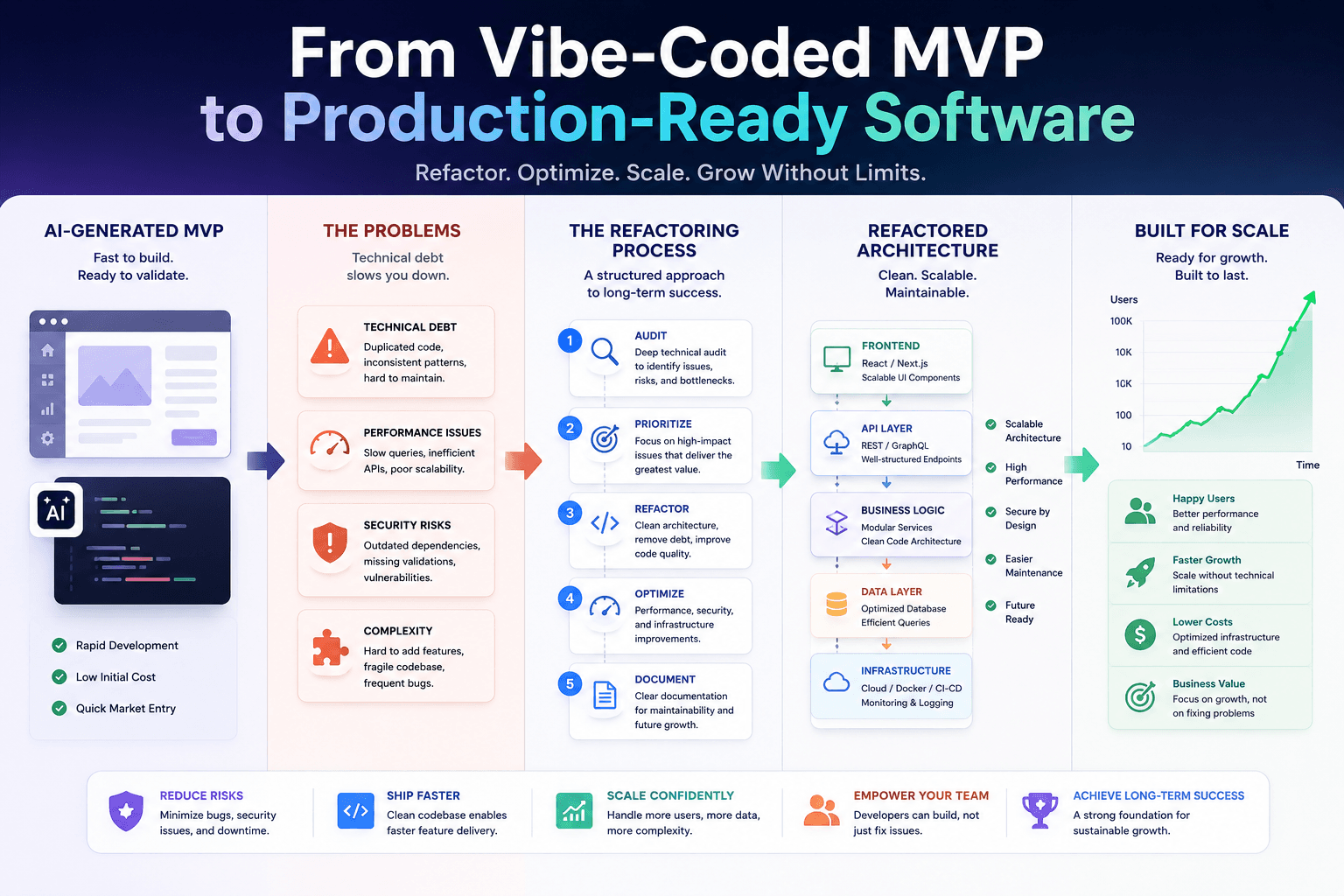
Vibe coding has fundamentally changed how software gets built.
Founders can launch products in days using AI-powered tools, generate features through prompts, and validate ideas without hiring a large engineering team. Platforms like Lovable, Bolt, Replit, and AI-assisted development environments have dramatically accelerated the software development process.
However, speed often comes with trade-offs.
Many startups discover that the application that worked perfectly with 10 users starts struggling at 100 users and breaking under 1,000. Pages become slower, bugs become more frequent, and adding new features becomes increasingly difficult.
The problem is rarely the idea.
The problem is that most vibe-coded applications are optimized for rapid delivery rather than long-term scalability.
While AI-generated applications accelerate development, many eventually require dedicated Vibe-Coded App Refactoring Services to improve scalability, maintainability, security, and long-term performance.
This is where refactoring becomes essential.
In this guide, we'll explain how to identify when your vibe-coded application needs refactoring, what the process involves, and how to transform an AI-generated MVP into production-ready software.
What Is a Vibe-Coded App?
A vibe-coded application is software built primarily through AI-assisted development rather than traditional engineering workflows.
Instead of manually writing every line of code, founders and teams rely on AI tools to generate components, pages, APIs, integrations, and business logic through prompts.
The advantages are obvious:
- Faster development
- Lower initial costs
- Rapid MVP launches
- Easier experimentation
- Shorter validation cycles
However, most AI-generated codebases share similar challenges:
- Inconsistent architecture
- Duplicate business logic
- Poor separation of concerns
- Limited scalability planning
- Missing documentation
- Security vulnerabilities
- Technical debt accumulation
These issues often remain hidden until the product begins growing.
Why Vibe-Coded Apps Break as They Scale
Most MVPs are designed to prove a concept.
They are not designed to handle thousands of users, complex workflows, or enterprise requirements.
Many startups initially choose MVP Development Services to validate their ideas quickly before investing in a more scalable architecture.
As user adoption increases, several issues begin to emerge.
Database Bottlenecks
AI-generated applications often create inefficient database queries.
As data grows, response times increase dramatically, leading to slower user experiences and higher infrastructure costs.
Feature Complexity
What starts as a simple application often evolves into a complex platform.
New features are added quickly, but the underlying architecture isn't updated accordingly.
The result is a tangled codebase where every change introduces new bugs.
Security Risks
Authentication, authorization, data validation, and API protection are frequently overlooked during rapid development.
A vulnerability that seems minor during MVP stages can become a major liability later.
Performance Issues
Large components, unnecessary API calls, inefficient rendering patterns, and poor state management can significantly impact performance.
Maintenance Challenges
Developers often struggle to understand AI-generated codebases that lack structure and documentation.
As a result, development slows down over time.
Is Your AI-Built App Slowing Down?
Get a free technical audit and discover exactly what needs to be fixed before scaling.
5 Signs Your Vibe-Coded App Needs Refactoring
1. New Features Take Longer to Build
If every feature requires modifying multiple unrelated areas of the application, architecture problems are likely emerging.
A healthy codebase should become easier to extend, not harder.
2. Bugs Keep Reappearing
Recurring bugs often indicate deeper structural issues.
Quick fixes may solve symptoms while leaving root causes untouched.
3. Performance Is Getting Worse
Slow dashboards, delayed API responses, and increased load times are common indicators of technical debt.
4. Multiple Developers Are Confused
If engineers spend significant time trying to understand the code before making changes, maintainability has become a problem.
5. Infrastructure Costs Are Increasing
Poorly optimized applications consume more server resources than necessary.
Refactoring often reduces operational costs while improving performance.
If you're experiencing several of these issues simultaneously, it may be time to invest in professional Vibe-Coded App Refactoring Services before technical debt begins slowing growth.
The Refactoring Process
Refactoring does not mean rebuilding the application from scratch.
In most cases, a strategic modernization approach is faster, safer, and more cost-effective.
A technical audit is often the first step in any successful Software Modernization initiative.
Step 1: Conduct a Technical Audit
Before making changes, teams need visibility into:
- Architecture quality
- Database structure
- Security vulnerabilities
- Performance bottlenecks
- Code organization
- Infrastructure configuration
The audit creates a roadmap for improvement.
Step 2: Identify Critical Risks
Not every issue deserves immediate attention.
Focus first on:
- Security vulnerabilities
- Performance bottlenecks
- Scalability limitations
- Data integrity concerns
These areas have the highest business impact.
Step 3: Improve Architecture
The goal is to create a foundation that supports future growth.
This often involves working with experienced engineers specializing in Custom Software Development and scalable application architecture.
Common improvements include:
- Modularizing components
- Separating business logic
- Standardizing API patterns
- Improving folder structures
- Reducing code duplication
Step 4: Optimize the Database
Database optimization often produces immediate performance gains.
Common improvements include:
- Query optimization
- Index creation
- Relationship restructuring
- Caching implementation
Step 5: Strengthen Security
Security improvements should include:
- Authentication review
- Authorization controls
- Input validation
- API protection
- Dependency updates
- Security testing
Step 6: Create Documentation
Many vibe-coded projects lack proper documentation.
Documenting architecture, workflows, APIs, and deployment processes significantly improves maintainability.
Refactor vs Rebuild: Which Is Better?
Many founders assume rebuilding is the best solution.
Usually, it isn't.
A complete rebuild introduces:
- Higher costs
- Longer timelines
- Increased risk
- Feature parity challenges
Refactoring allows teams to preserve existing functionality while improving the underlying system.
A rebuild should only be considered when the application architecture is fundamentally unsalvageable.
In most cases, strategic refactoring delivers faster results with lower risk.
The Business Benefits of Refactoring
Refactoring is not just a technical investment.
It creates measurable business value.
Faster Development
Clean architecture enables teams to ship features faster.
Better User Experience
Performance improvements lead to higher user satisfaction and retention.
Lower Maintenance Costs
Engineers spend less time fixing bugs and more time building new functionality.
Improved Scalability
The application becomes capable of supporting future growth.
Reduced Risk
Security and reliability improvements decrease the likelihood of costly incidents.
Related Reading: Custom Software Development Services
Future-Proofing Your Vibe-Coded Application
AI-assisted development is here to stay.
The companies that win won't necessarily be those that build fastest.
They will be the companies that successfully transition from rapid experimentation to sustainable engineering.
Companies increasingly combine vibe coding with professional AI Development Services to ensure scalability, maintainability, performance, and security as their products mature.
Vibe coding is excellent for validating ideas.
Refactoring is what transforms those ideas into scalable products.
The sooner technical debt is addressed, the easier and less expensive the process becomes.
Need Help Refactoring a Vibe-Coded App?
If your Lovable, Bolt, Replit, or AI-generated application is becoming difficult to maintain, our team can help.
At withnocode, we specialize in transforming rapidly-built MVPs into scalable production-ready software through architecture reviews, performance optimization, security improvements, and ongoing maintenance.
Whether you're preparing for growth, fundraising, enterprise customers, or large-scale adoption, a structured refactoring process can dramatically improve your application's reliability and long-term scalability.
Learn more about our Vibe-Coded App Refactoring Services and discover how we help startups transform AI-generated MVPs into scalable software platforms.
Ready to Scale Your Vibe-Coded App?
Get a free technical assessment and discover exactly what your application needs to become production-ready.
Final Thoughts
Building with AI can accelerate innovation, but every successful product eventually reaches a point where speed must be balanced with structure.
If your application is becoming harder to maintain, slower to evolve, or more expensive to operate, it may be time for a technical audit and refactoring initiative.
The goal isn't to replace what you've built.
The goal is to strengthen it before growth exposes the cracks.
A well-executed refactoring strategy can extend the life of your application, improve development velocity, reduce operational costs, and create a foundation capable of supporting long-term business success.
Related Articles
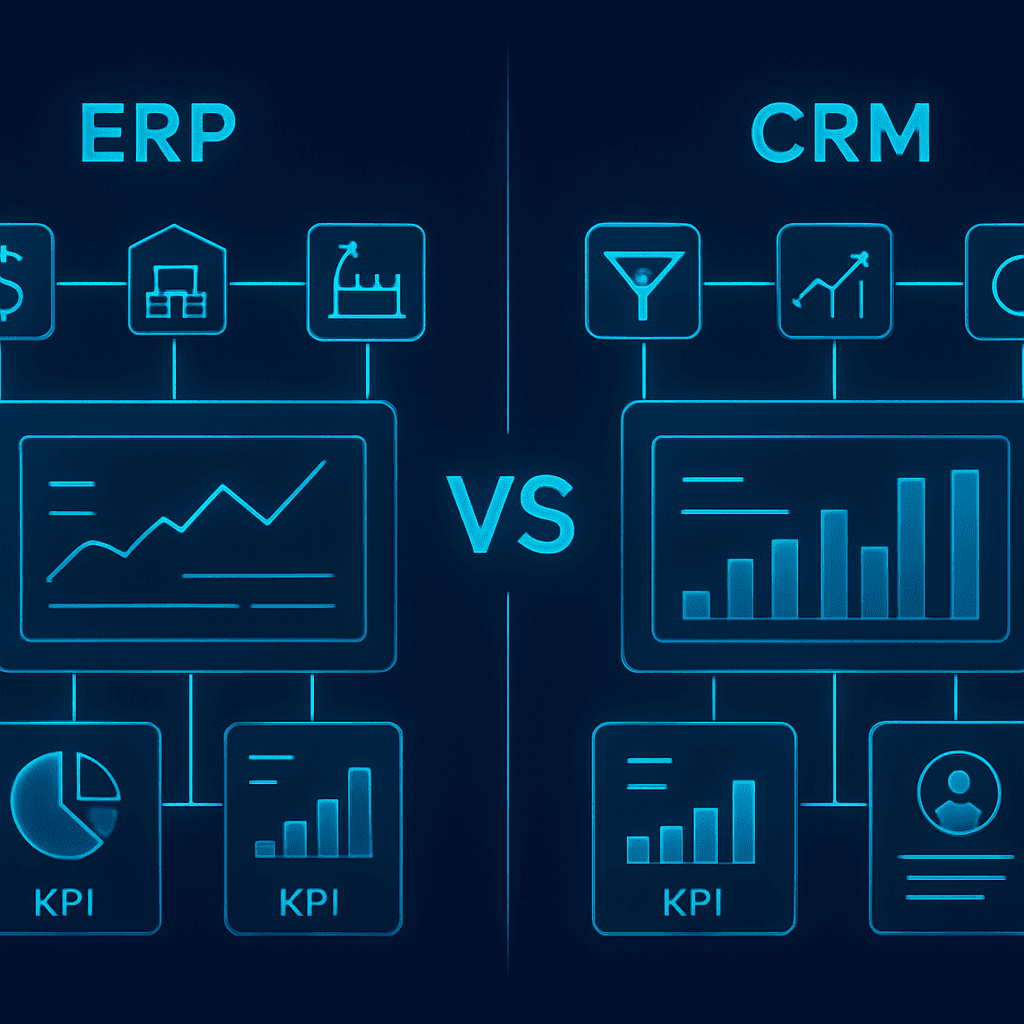
ERP vs CRM: What's the Difference?
Understand the key differences between ERP and CRM systems: what each one does, their benefits, use cases, costs, the role of AI, and how to decide which system (or both) your business actually needs.
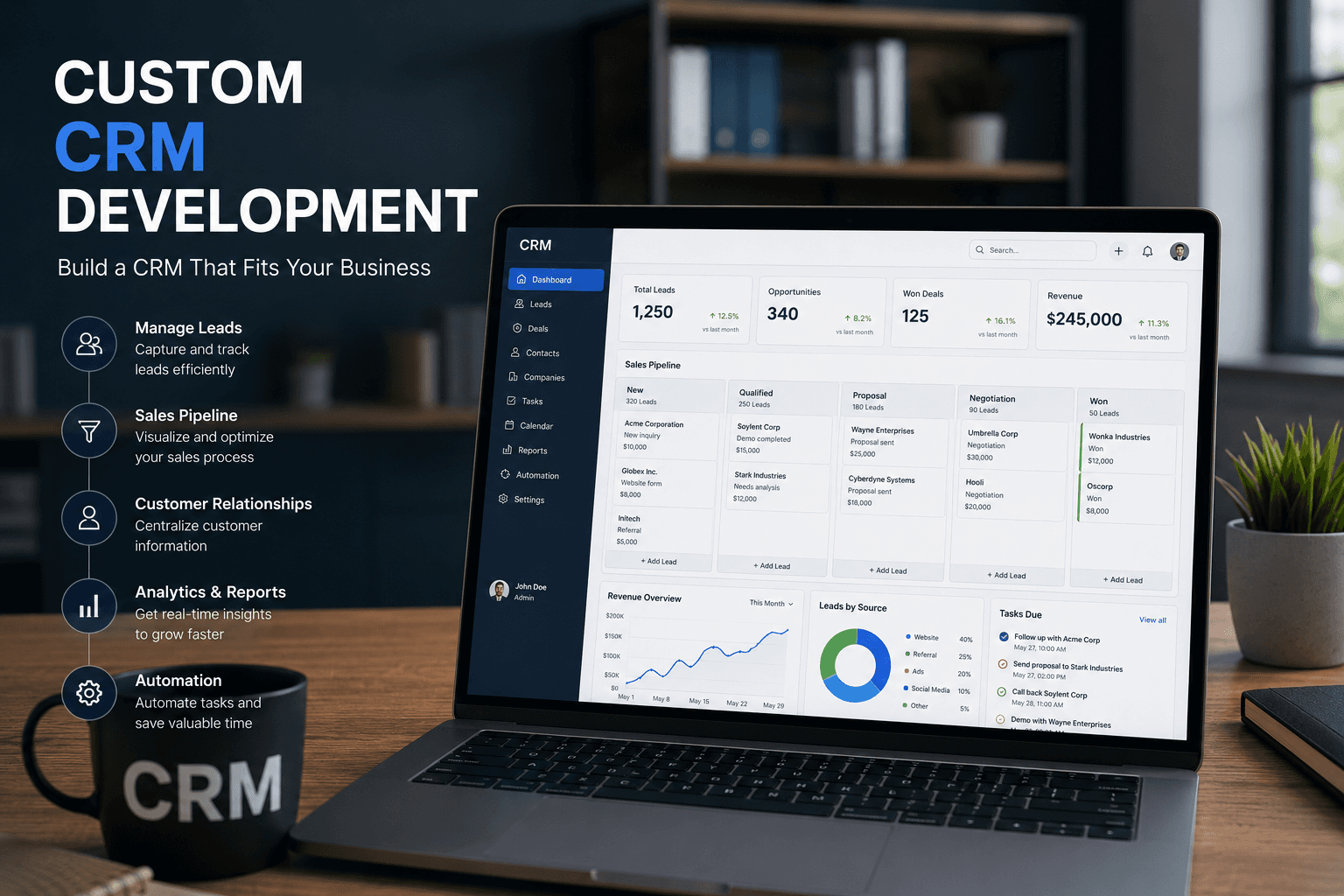
Custom CRM Development: Complete Guide
Everything businesses need to know about custom CRM development: what it is, benefits, essential features, AI-powered capabilities, costs, the development process, and how to decide if building a custom CRM is right for your company.