Nearshore vs Offshore Development: Which Is Right for You?
Compare nearshore and offshore software development on cost, time zones, communication, quality and risk, and see which fits your team.
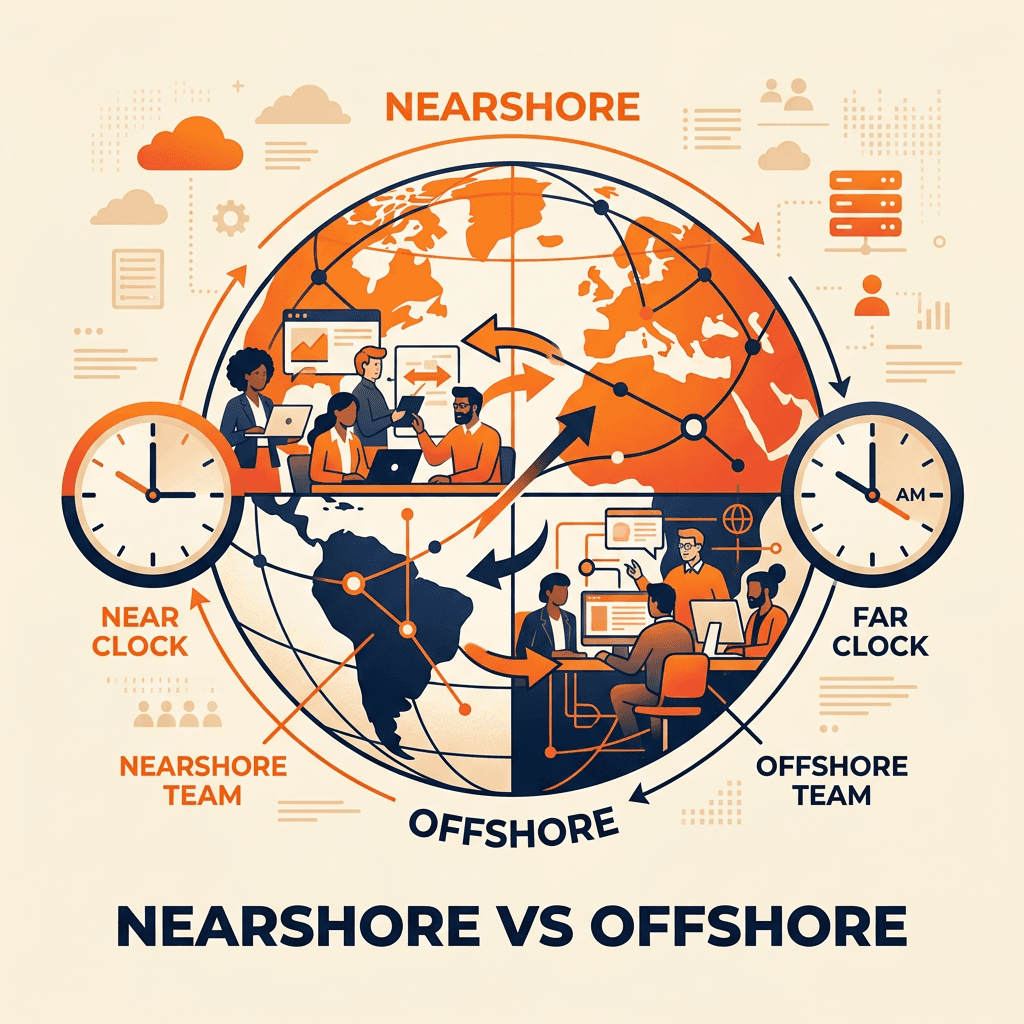
Outsourcing software development can cut costs and speed up delivery, but the location of your team changes how the work actually feels day to day. The two most common options for US companies are nearshore (Latin America) and offshore (Asia and Eastern Europe). Both work. They just solve different problems.
Quick answer: choose nearshore when you need daily collaboration, fast feedback and overlapping work hours. Choose offshore when the work is well defined, can run asynchronously and cost is the top priority. Many companies use nearshore for product work and offshore for well-scoped tasks.
The three models
Rates are approximate market ranges based on DistantJob. For a country-by-country view, see software developer rates by country.
| Model | Where | Time gap to US | Typical hourly rate |
|---|---|---|---|
| Onshore | United States | 0 to 3 hours | $80 to $150+ (agencies $120 to $250) |
| Nearshore | Latin America | 0 to 5 hours | about $35 to $80 for mid-level to senior |
| Offshore | Asia, Eastern Europe | 7 to 12+ hours | about $25 to $80 |
Side-by-side comparison
| Factor | Nearshore | Offshore |
|---|---|---|
| Work-hour overlap | Most or all of the US day | Little or none; early or late calls |
| Feedback speed | Same day | Often next day |
| Hourly cost | Low to medium | Lowest in many markets |
| Total cost | Often lower than expected, thanks to less rework | Can grow with delays and rework |
| Communication style | Close to US business culture | Varies; needs more written process |
| Travel | Short flights | Long-haul |
When nearshore is the better choice
- your product changes often and needs daily decisions;
- you run agile sprints with standups and reviews;
- your in-house team needs to pair with the outsourced developers;
- you are building an MVP where speed of feedback matters more than the lowest rate.
Read the full guide to nearshore software development in Brazil.
When offshore makes sense
- the scope is clear and stable, with detailed specs;
- work can be handed off at the end of the day and reviewed the next morning;
- you want coverage around the clock (for example, support or monitoring);
- the budget is very tight and the task is low-risk.
The hidden cost of time zones
The hourly rate is only part of the cost. Every question that waits a day adds a day to the project. Over a few months, that delay can cancel out a lower rate. Nearshore teams reduce this because blockers are solved the same day.
How to decide
- How often will requirements change? Often: nearshore. Rarely: either.
- How much will your team talk to the vendor? Daily: nearshore. Weekly: offshore can work.
- What is the real budget limit? Compare total cost, not only hourly rates. See how much it costs to hire developers in Brazil.
- Who manages the work? If you have strong project management and specs, offshore is easier to run.
| Factor | Nearshore | Offshore |
|---|---|---|
| Best for | Product development, agile teams, MVPs | Well-defined tasks, maintenance, 24-hour cycles |
FAQ
What is the main difference between nearshore and offshore?
Distance and time zones. Nearshore teams are in nearby countries with overlapping hours; offshore teams are far away, often with a large time difference.
Is nearshore more expensive than offshore?
Hourly rates are often a bit higher, but total cost can be similar or lower because of faster communication and less rework.
Which countries are considered nearshore for the US?
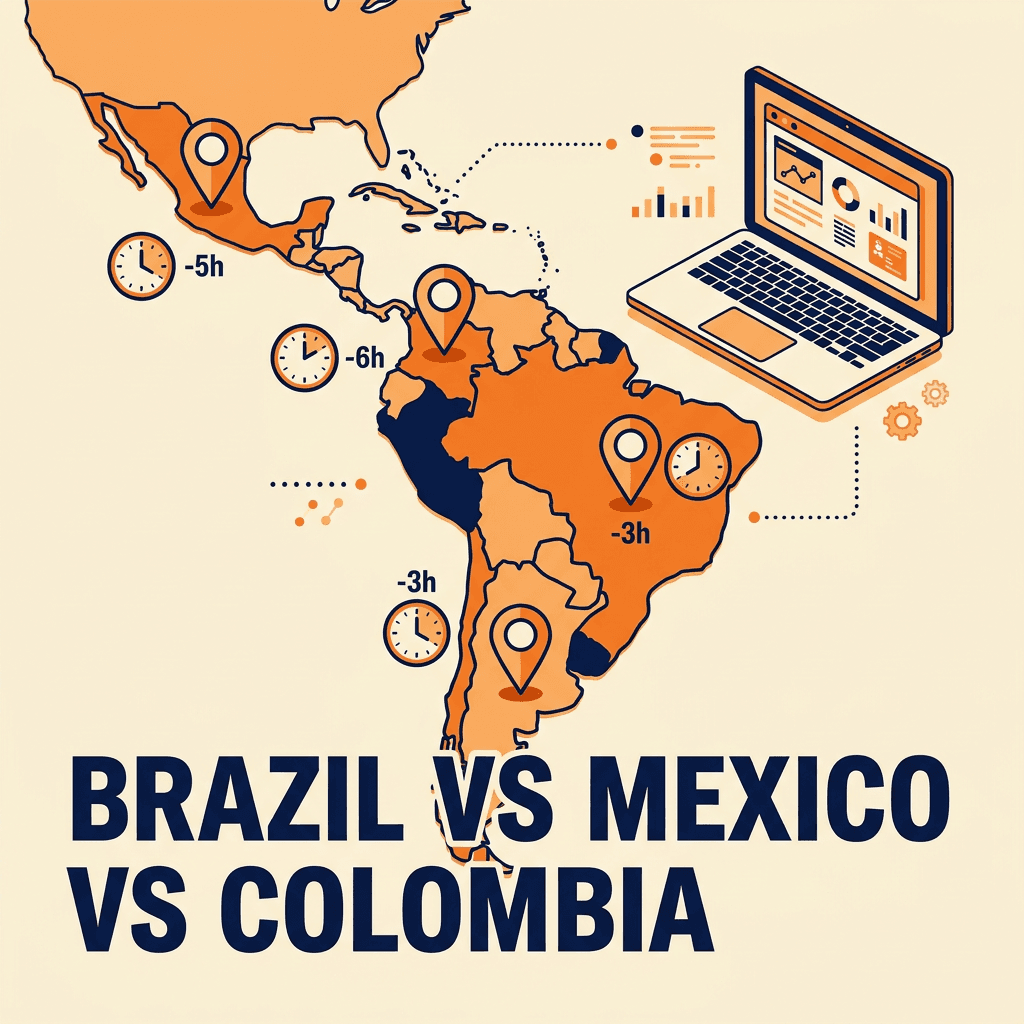
Mainly Latin America: Brazil, Mexico, Colombia, Argentina, Costa Rica and others. See Brazil vs Mexico vs Colombia.
Can I mix nearshore and offshore?
Yes. Many companies keep core product work nearshore and send well-defined tasks offshore.
Conclusion
Nearshore wins when collaboration and speed matter; offshore wins when work is well defined and price comes first. Choose based on how your team works, not only on the hourly rate.
Work with a Nearshore Team
withnocode provides senior Brazilian developers and dedicated teams working in US time zones. See our IT staff augmentation services or the best nearshore development companies for US businesses.
Related Articles
Brazil vs Mexico vs Colombia: Where to Hire Developers
Compare Brazil, Mexico, Colombia and Argentina for hiring developers: rates, time zones, talent, English and risks for US companies.
How to Deploy a Bolt App to Production the Right Way
Take your Bolt.new app from prototype to production: hosting, environment variables, database, domain, monitoring and a launch checklist.