No-Code vs Custom App Development: Which Should You Choose?
Choosing between no-code and custom development? Learn when to use each approach, cost differences, and why smart companies combine both.
Last updated: April 2026
Choosing the right approach to build an application is one of the most important decisions a business can make. Today, companies are no longer limited to traditional development — they now have access to powerful no-code platforms and AI-assisted tools that can dramatically change how apps are built.
But with so many options available, the question becomes clear: should you use no-code or invest in custom development?
The answer depends on your goals, timeline, budget, and long-term vision.
What Is No-Code Development?
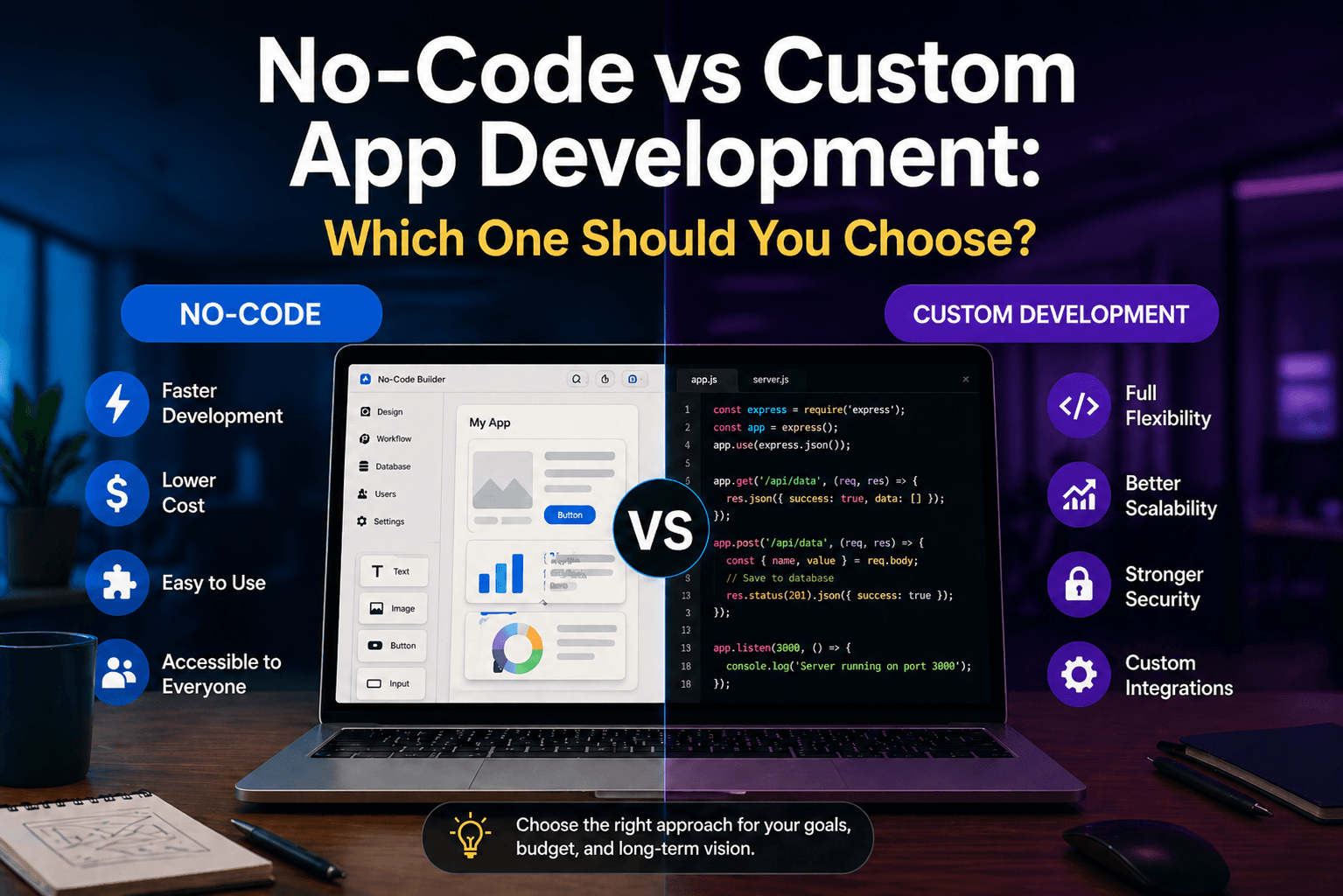
No-code development refers to building applications using visual tools instead of writing traditional code. Platforms allow users to design, build, and launch applications through drag-and-drop interfaces and pre-built logic.
This approach has gained massive traction because it lowers the barrier to entry and speeds up development.
Key advantages of no-code:
- Faster development cycles
- Lower upfront cost
- Reduced need for large teams
- Easier iteration and testing
Startups, in particular, benefit from no-code because they can validate ideas quickly without investing heavily in engineering resources.
What Is Custom App Development?
Custom development involves building an application from scratch using programming languages and frameworks. This approach gives developers full control over every aspect of the system, including architecture, performance, and scalability.
While it requires more time and resources, it is often necessary for complex or large-scale applications.
Key advantages of custom development:
- Complete flexibility
- Better performance at scale
- Ability to handle complex systems
- Full control over infrastructure
This is typically the preferred approach for enterprise-level solutions or products that require long-term scalability.
No-Code vs Custom Development: A Direct Comparison
| Criteria | No-Code | Custom Development |
|---|---|---|
| Cost | Low to Medium | Medium to High |
| Speed | Very Fast | Slower |
| Flexibility | Limited | Full |
| Scalability | Moderate | High |
| Maintenance | Easier | More complex |
No-code is ideal for speed and efficiency, while custom development excels in flexibility and long-term scalability.
When Should You Choose No-Code?
No-code is the best choice when:
- You need to launch quickly
- You are building an MVP (Minimum Viable Product)
- Your budget is limited
- Your application does not require complex logic
- You want to test an idea before scaling
Many successful startups begin with no-code solutions and transition to custom development only after validating their product.
When Should You Choose Custom Development?
Custom development makes more sense when:
- Your application requires complex features
- You need full control over performance and infrastructure
- Scalability is a top priority
- Your product involves advanced integrations
- You are building a long-term, high-growth platform
For businesses with strong technical requirements, custom development remains the most reliable option.
The Hybrid Approach (What Most Smart Companies Do)
Today, many companies are no longer choosing one approach over the other — they are combining both.
A common strategy is:
- Start with no-code to validate the idea
- Gather user feedback
- Transition to custom development when scaling
This hybrid approach allows businesses to minimize risk while maintaining flexibility for future growth.
The Cost Perspective
One of the biggest differences between no-code and custom development is cost.
No-code projects can often be built for a fraction of the cost of traditional development. However, as complexity increases, the limitations of no-code tools may require a transition to custom solutions.
If you want a deeper understanding of how pricing works — including real-world examples and detailed cost breakdowns — check out our complete app development cost guide.
Common Mistakes to Avoid
Choosing the wrong approach can lead to wasted time and budget. Some of the most common mistakes include:
- Overbuilding too early with custom development
- Choosing no-code for highly complex systems
- Ignoring long-term scalability needs
- Underestimating maintenance and future costs
The key is aligning your development strategy with your current stage and business goals.
Final Thoughts
There is no single "best" approach when it comes to building applications.
No-code development offers speed, efficiency, and lower costs, making it ideal for early-stage projects and rapid validation. Custom development, on the other hand, provides the flexibility and scalability required for complex, long-term solutions.
The smartest decision is not choosing one over the other — it is understanding when to use each.
Businesses that take a strategic approach to development are able to build faster, spend more efficiently, and scale more effectively in an increasingly competitive market.
Related Articles
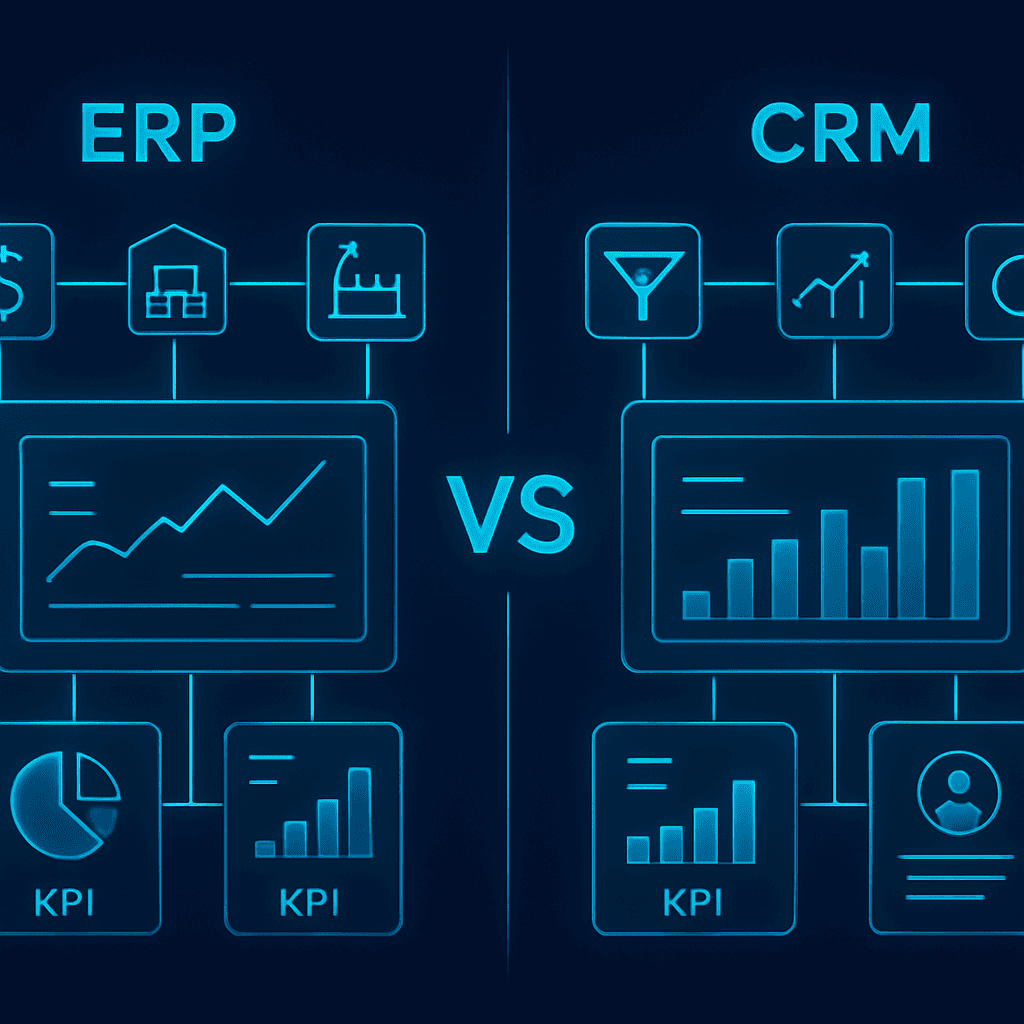
ERP vs CRM: What's the Difference?
Understand the key differences between ERP and CRM systems: what each one does, their benefits, use cases, costs, the role of AI, and how to decide which system (or both) your business actually needs.
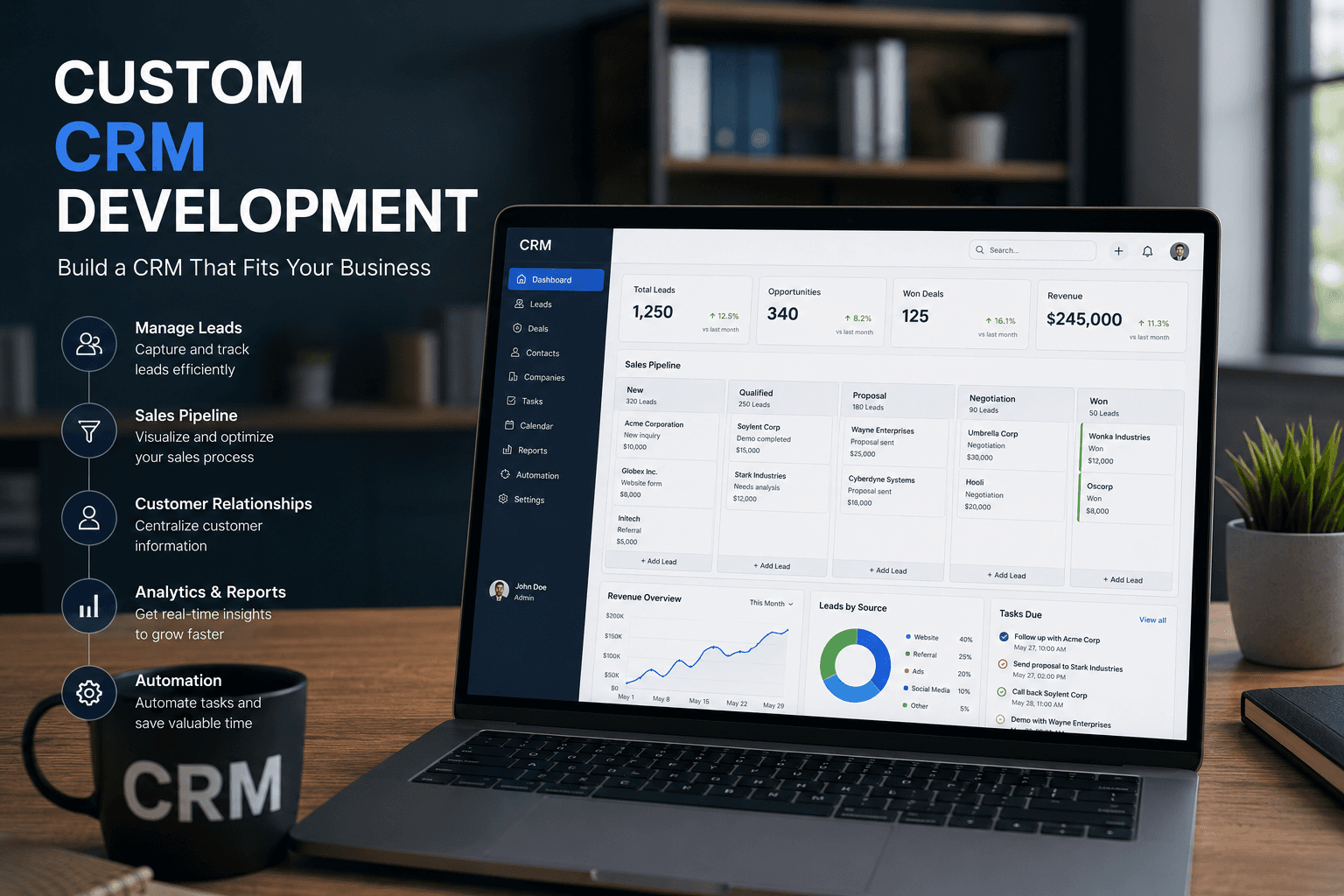
Custom CRM Development: Complete Guide
Everything businesses need to know about custom CRM development: what it is, benefits, essential features, AI-powered capabilities, costs, the development process, and how to decide if building a custom CRM is right for your company.