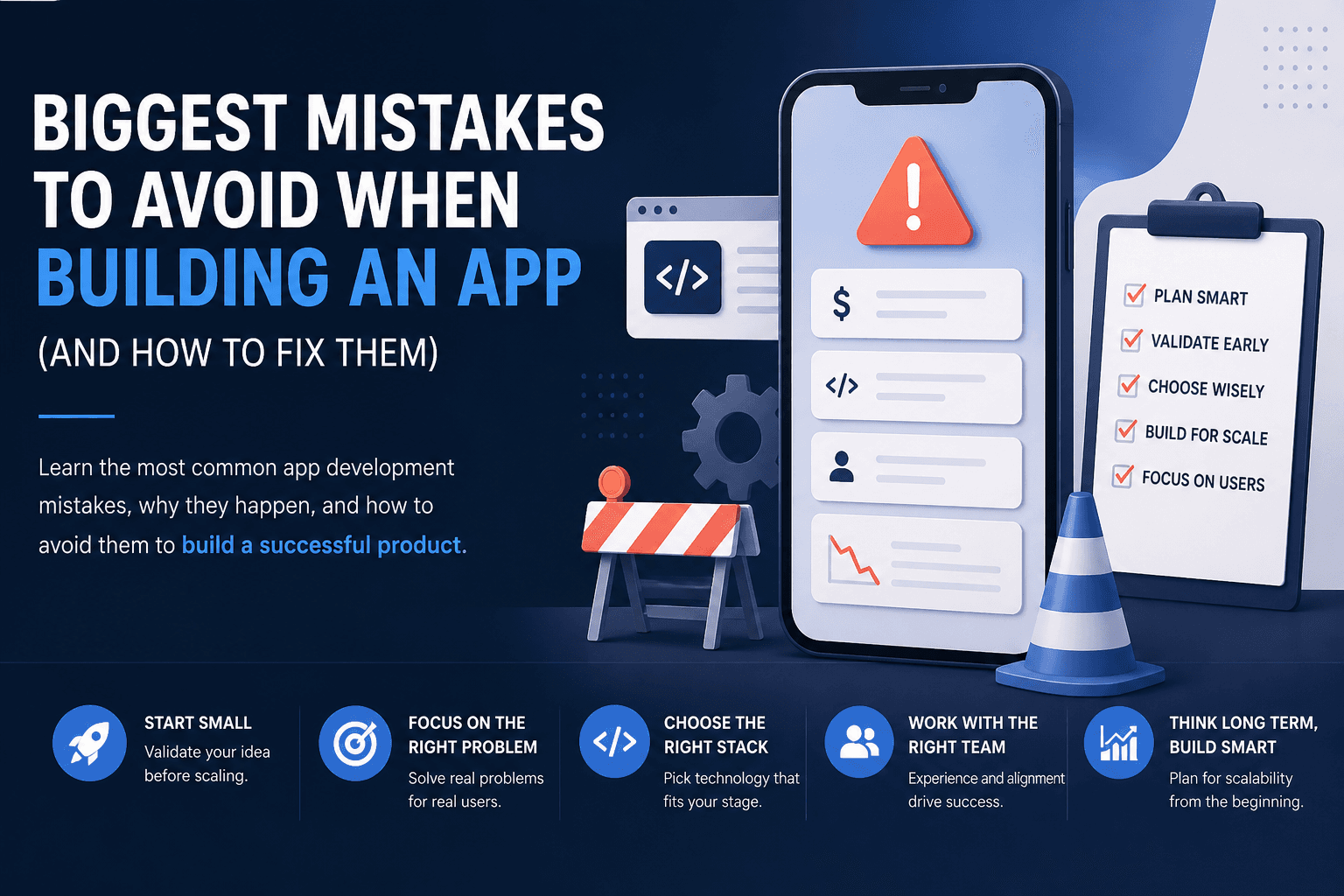
Biggest Mistakes to Avoid When Building an App (And How to Fix Them)
Most apps fail not because of bad ideas, but because of poor decisions during development. Learn the 7 biggest mistakes and how to avoid them.
Last updated: May 2026
Building an app has never been more accessible.
With no-code platforms, AI tools, and modern development frameworks, launching a digital product is faster than ever. But despite this progress, one reality hasn't changed:
Most apps still fail.
Not because of bad ideas — but because of poor decisions during the development process.
In this guide, we'll break down the most common mistakes teams make when building an app, why they happen, and how to avoid them.
Mistake #1: Starting with Full Custom Development Too Early
One of the most common (and expensive) mistakes is jumping straight into full custom development.
At first glance, it seems logical:
- More control
- Better performance
- Long-term scalability
But early-stage products don't need full control — they need validation.
Building everything from scratch too early leads to:
- Higher costs
- Slower time to market
- Unnecessary complexity
How to fix it:
Start with a faster approach. Most successful startups begin with MVP-focused strategies to validate ideas before scaling.
Mistake #2: Skipping Validation
Many teams build products based on assumptions instead of real user feedback.
They spend months developing features only to discover:
- Users don't need them
- The problem isn't significant
- The solution isn't compelling
This is one of the biggest reasons apps fail.
How to fix it:
Validate early by launching a simplified version of your product and gathering real user feedback. Speed matters more than perfection in the early stages.
Mistake #3: Choosing the Wrong Technology Stack
Technology decisions made early can have long-term consequences.
Some teams:
- Choose tools based on hype
- Overcomplicate their stack
- Lock themselves into rigid platforms
This often leads to:
- Scalability issues
- Expensive migrations
- Limited flexibility
How to fix it:
Choose technology based on your stage — not trends.
- Early stage → speed and flexibility
- Growth → hybrid approach
- Scale → custom architecture
Understanding the trade-offs between different approaches — especially no-code vs custom development — is key to making the right decision.
Mistake #4: Hiring the Wrong Team
The team you choose has a direct impact on your product's success.
Common mistakes include:
- Choosing based only on price
- Hiring teams without product experience
- Working with developers who don't understand business goals
The result:
- Poor communication
- Misaligned expectations
- Wasted time and budget
How to fix it:
Look beyond technical skills. Choosing the right team is critical. If you're evaluating options, understanding how to choose the right development partner can make a significant difference.
The right team should understand:
- Product strategy
- Scalability
- User experience
- Long-term vision
Mistake #5: Ignoring Scalability Too Late (or Too Early)
Scalability is often misunderstood.
Some teams ignore it completely. Others over-engineer for it too early.
Both are mistakes.
Ignoring scalability leads to:
- Performance issues
- System breakdowns
- Costly rework
Over-engineering leads to:
- Wasted time
- Unnecessary complexity
- Slower launch
How to fix it:
Adopt a progressive approach, evolving your architecture over time instead of rebuilding everything at once.
Mistake #6: Overspending in the Early Stages
Many founders invest too much too soon.
They allocate large budgets before:
- Validating the idea
- Understanding user behavior
- Refining the product
This increases risk significantly.
How to fix it:
Control your initial investment by understanding how development decisions impact cost at each stage.
Focus on:
- Building lean
- Testing quickly
- Iterating efficiently
Smart allocation of resources early can make a major difference later.
Mistake #7: Focusing on Features Instead of the Problem
Teams often focus on building features instead of solving real problems.
This leads to:
- Bloated products
- Unclear value propositions
- Poor user adoption
How to fix it:
Focus on the core problem. Every feature should exist for a reason — not because it's possible, but because it's necessary.
How to Avoid These Mistakes Altogether
The biggest difference between successful and unsuccessful apps is not the idea — it's the approach.
Teams that succeed tend to:
- Start small and validate early
- Choose technology strategically
- Iterate continuously
- Adapt as they grow
- Avoid rigid decisions too early
In practice, building a successful app is less about doing everything right — and more about avoiding critical mistakes at the right time.
Final Thoughts
Building an app today is faster than ever — but also more complex in terms of decision-making. The tools have improved. The margin for error hasn't. Most failures don't come from lack of effort, but from choosing the wrong approach too early. Understanding what to build, how to build it, and when to evolve is what ultimately defines success.
A Practical Perspective
In many cases, the difference between a successful product and a failed one comes down to early decisions.
Working with teams that understand multiple approaches — from rapid MVP development to scalable architectures — can help avoid unnecessary mistakes and accelerate the entire process.
Related Articles
ERP vs CRM: What's the Difference?
Understand the key differences between ERP and CRM systems: what each one does, their benefits, use cases, costs, the role of AI, and how to decide which system (or both) your business actually needs.
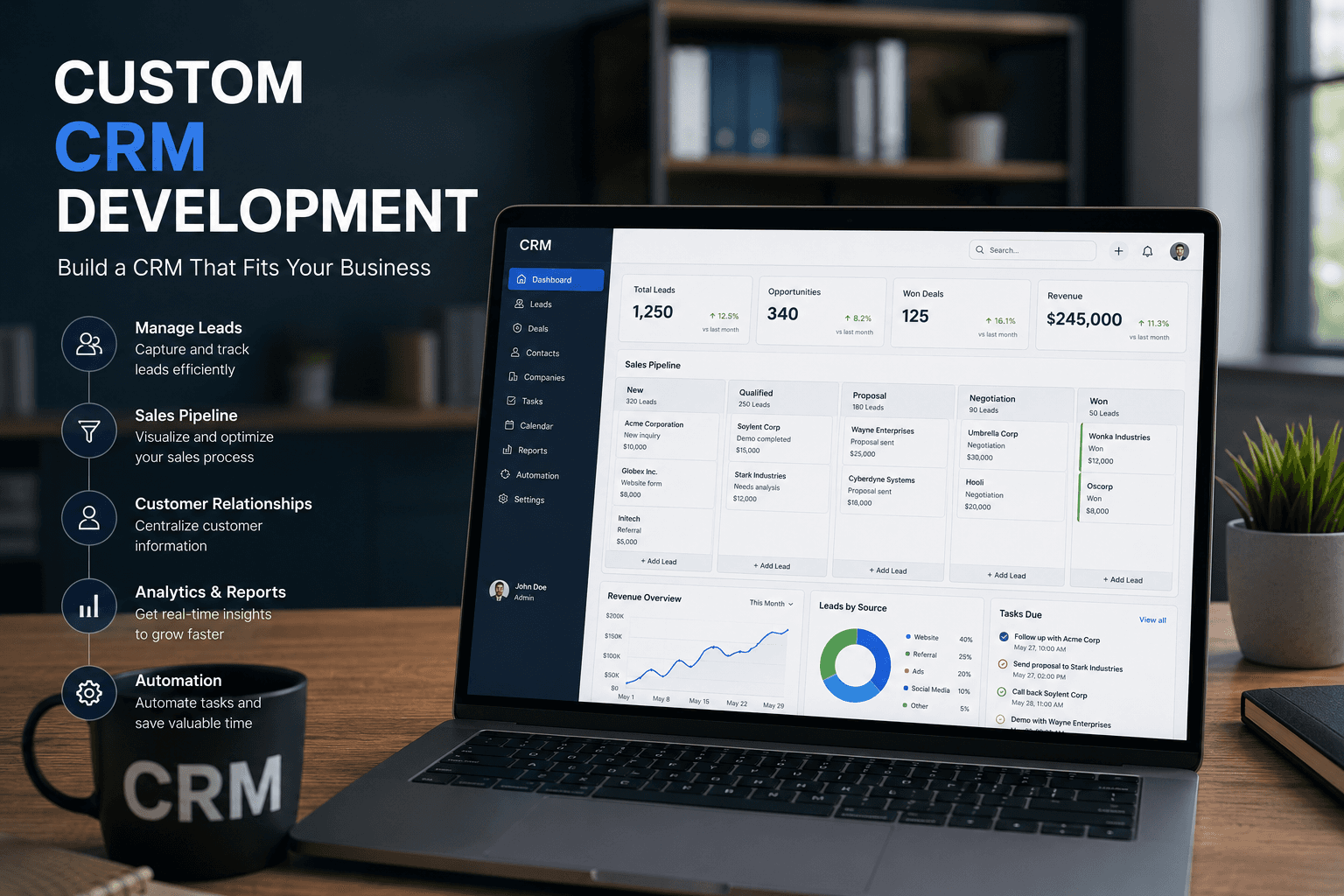
Custom CRM Development: Complete Guide
Everything businesses need to know about custom CRM development: what it is, benefits, essential features, AI-powered capabilities, costs, the development process, and how to decide if building a custom CRM is right for your company.