How to Manage a Nearshore Development Team Successfully
A practical guide to managing a nearshore development team: onboarding, rituals, communication, tools, quality and mistakes to avoid.
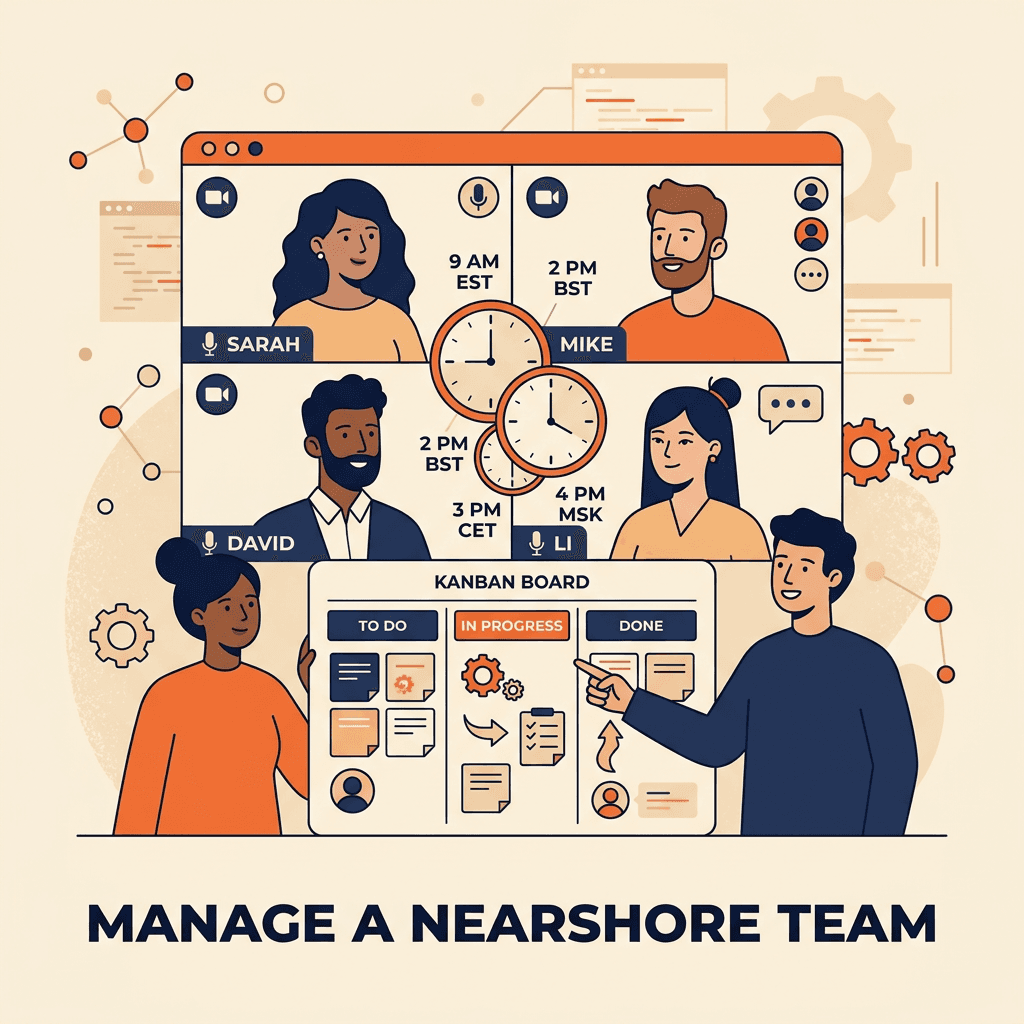
Hiring a nearshore team is the easy part. Getting real value from it depends on how you work together in the first weeks: how you onboard people, how decisions are made and how quality is checked. Most failed outsourcing projects fail on process, not on talent.
Quick answer: treat your nearshore developers as part of your team. Give them full context on day one, keep short daily rituals in overlapping hours, write decisions down, define what "done" means and review code and demos every sprint. Keep repositories and accounts in your name.
Before the team starts
- Define the goal of the first 30 days: one clear deliverable, not a long wish list.
- Prepare access: repositories, staging environments, documentation, design files and communication tools ready before day one.
- Name a single point of contact on your side who can make product decisions quickly.
- Agree on working hours with at least four overlapping hours with your core team.
Onboarding in the first two weeks
- Walk the team through the product, the users and the business goals.
- Share the architecture, coding standards and how code gets reviewed and deployed.
- Start with small, real tasks that touch different parts of the system.
- Pair a nearshore developer with someone from your team for the first tasks.
- Review progress at the end of week one and adjust.
Rituals that work
| Ritual | Frequency | Purpose |
|---|---|---|
| Standup (15 min) | Daily, in overlapping hours | Unblock work fast |
| Sprint planning | Every 1 to 2 weeks | Agree on priorities and scope |
| Demo | End of each sprint | See working software, not reports |
| Retrospective | End of each sprint | Fix process problems early |
| One-on-ones | Every 2 to 4 weeks | Catch issues before they grow |
Communication habits
- Write decisions in a shared place (tickets, docs), not only in calls.
- Prefer clear, short written specs with acceptance criteria.
- Use video for discussions and chat for quick questions.
- Encourage people to ask questions and push back; silence is a warning sign.
- Share context about why something matters, not only what to build.
Quality and delivery
- Definition of done: code reviewed, tested, documented and deployed to staging.
- Code review: every change reviewed by at least one other developer.
- Automated tests and CI: catch regressions before they reach users.
- Metrics: track delivery over time (finished stories, cycle time, bugs found after release), not hours worked.
Common mistakes
- treating the nearshore team as a ticket-taking service with no context;
- no clear product owner on your side, so the team waits for answers;
- skipping demos and reviewing work only at the end;
- keeping code or cloud accounts in the vendor's name;
- measuring hours instead of outcomes.
Tools that help
- project tracking (Jira, Linear, ClickUp);
- code hosting and reviews (GitHub, GitLab);
- documentation (Notion, Confluence);
- communication (Slack, Microsoft Teams) and video calls.
The specific tools matter less than using the same ones as your internal team.
New to the model? Start with what IT staff augmentation is, then compare Toptal alternatives and read the guide to nearshore software development in Brazil.
FAQ
How much overlap do I need with a nearshore team?
At least four hours a day for core collaboration. Teams in Latin America often overlap most of the US workday. See nearshore vs offshore.
Should nearshore developers join our internal meetings?
Yes, the ones relevant to their work. Including them builds context and ownership.
Who should manage the nearshore team?
Your product owner or tech lead sets priorities. With a managed team, the vendor's lead handles day-to-day coordination.
How do I know the team is performing well?
Look at working software in demos, predictable delivery sprint after sprint and few bugs after release.
Conclusion
A nearshore team performs best when it is integrated, not outsourced at arm's length. Clear context, short rituals, written decisions and regular demos turn a vendor into a real extension of your team.
Work with withnocode
withnocode provides senior Brazilian developers who join your team in US time zones, with management support included. See our nearshore developers services.
Related Articles
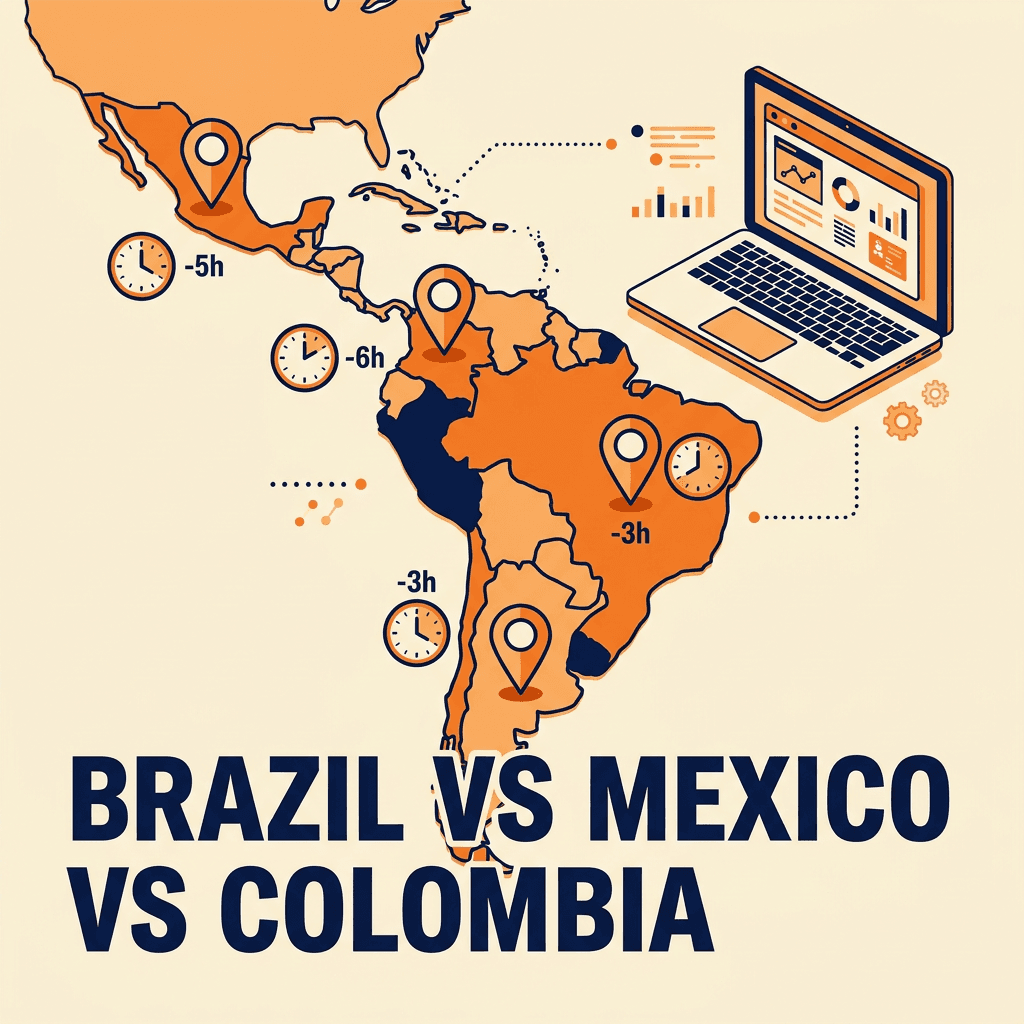
Brazil vs Mexico vs Colombia: Where to Hire Developers
Compare Brazil, Mexico, Colombia and Argentina for hiring developers: rates, time zones, talent, English and risks for US companies.
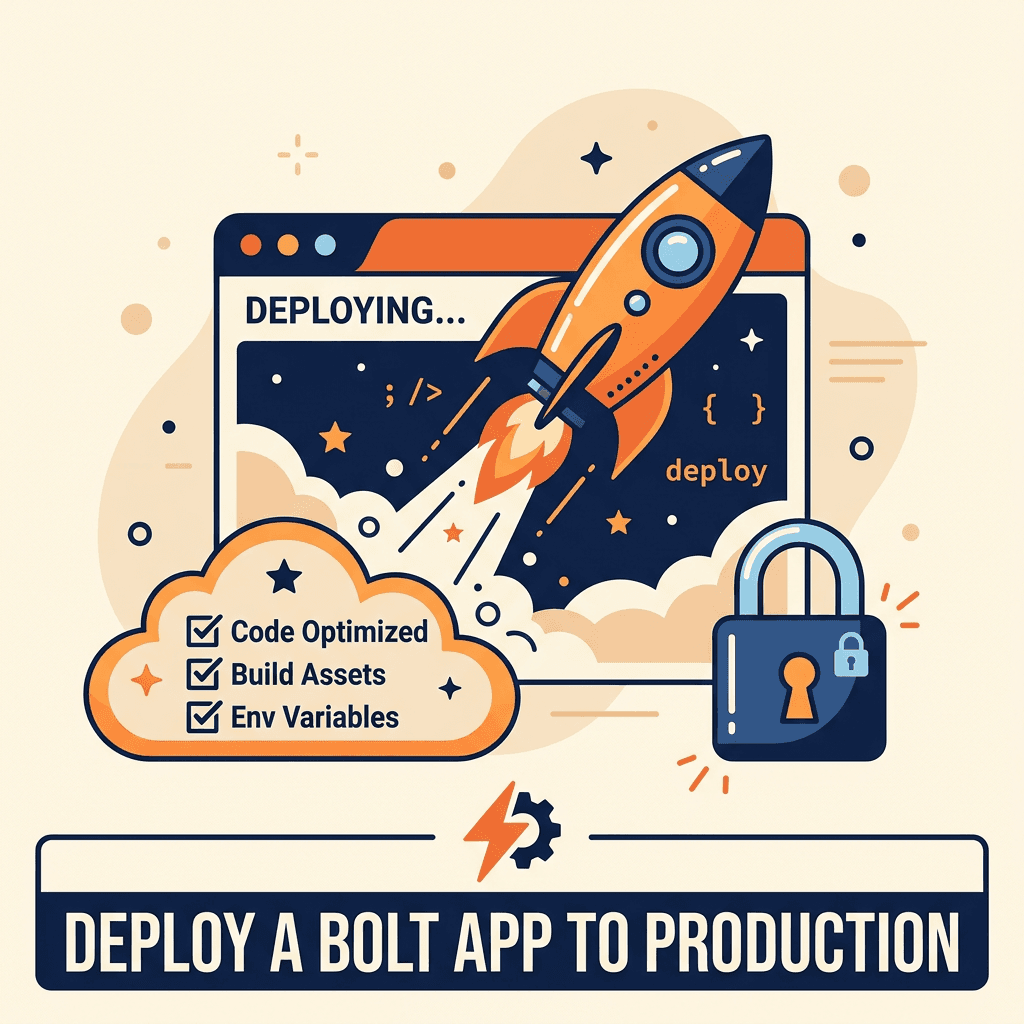
How to Deploy a Bolt App to Production the Right Way
Take your Bolt.new app from prototype to production: hosting, environment variables, database, domain, monitoring and a launch checklist.