AI Agent Development Cost: Pricing, Factors and Examples
How much it costs to build an AI agent, from proof of concept to enterprise, plus run costs, integrations and the factors that move the price.
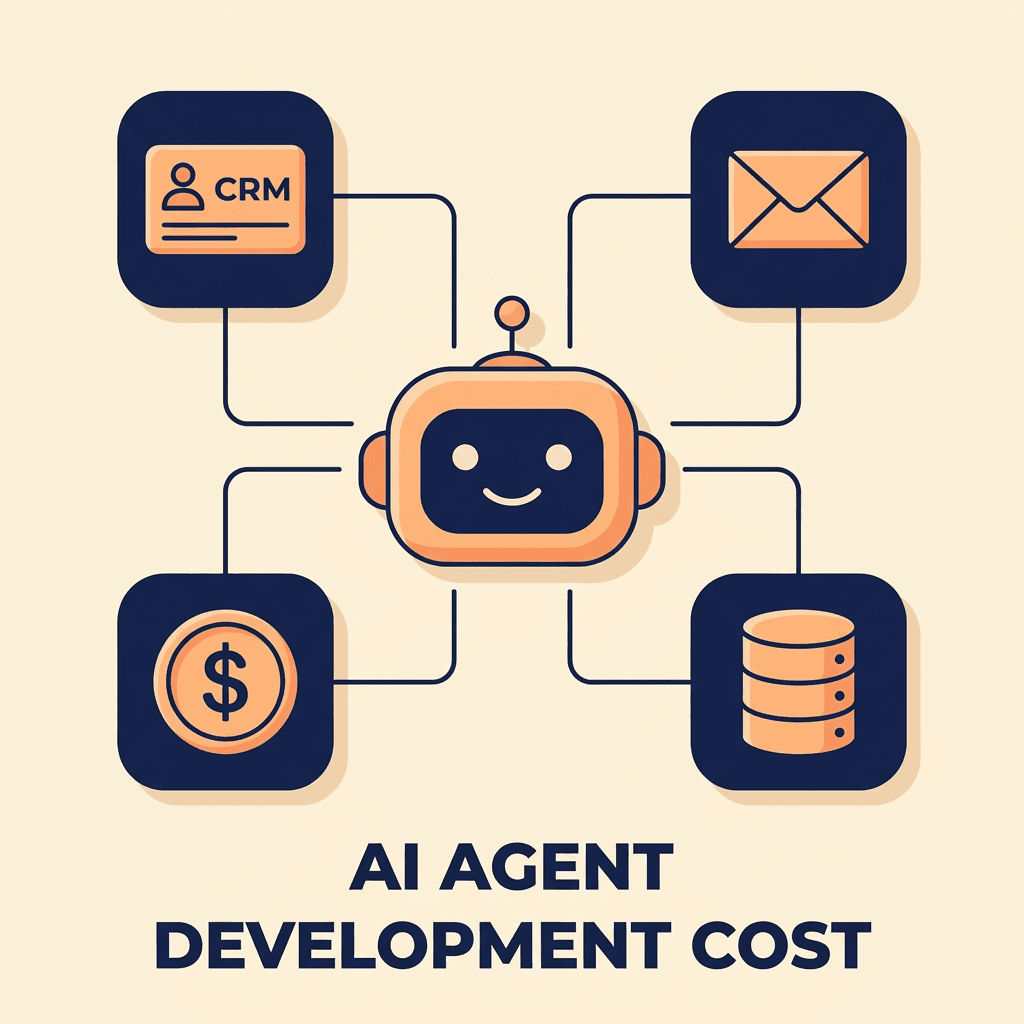
AI agents go beyond chatbots. They read data, make decisions in steps and take actions in your systems: updating a CRM, processing an invoice, answering a support ticket with real account data. Because they touch real systems, the cost depends far more on integrations, data and safety than on the AI model itself.
Quick answer: a proof of concept usually costs $10,000 to $30,000. A production agent for one workflow with a few integrations costs $30,000 to $80,000. Agents that combine retrieval (RAG), several tools and approvals typically cost $80,000 to $200,000, and enterprise multi-agent systems can exceed $200,000 to $500,000. Plan another 15% to 25% of the build cost per year for maintenance, plus usage costs.
Cost by type of agent
These are approximate market ranges. Published guides such as Space-O's AI agent cost breakdown report that most mid-market builds land between $80,000 and $250,000.
| Type | What it does | Typical cost | Typical time |
|---|---|---|---|
| Proof of concept | Tests one use case with real data, limited users | $10,000 to $30,000 | 3 to 6 weeks |
| Single-workflow production agent | One process end to end, 1 to 3 integrations, human review | $30,000 to $80,000 | 6 to 12 weeks |
| Multi-tool agent with RAG | Searches your documents, uses several tools and systems | $80,000 to $200,000 | 3 to 6 months |
| Enterprise multi-agent system | Several coordinated agents, security, audit trails, scale | $200,000 to $500,000+ | 6+ months |
What drives the cost
- Integrations: each system the agent reads from or writes to (CRM, ERP, email, databases) adds work. Standard API integrations often cost a few thousand dollars each; legacy systems cost more.
- Data preparation: messy documents and scattered data need cleaning and structuring before the agent can use them.
- Retrieval (RAG): letting the agent search your knowledge base adds indexing, search tuning and testing. See what is RAG.
- Autonomy level: an agent that suggests actions is cheaper than one that executes them, because execution needs permissions, approvals and rollback.
- Evaluation and testing: measuring accuracy on real cases is essential and often underestimated.
- Security and compliance: access control, audit logs, data residency and regulations such as HIPAA.
- User interface: an agent inside Slack or your existing app costs less than a new custom dashboard.
Ongoing costs
Usage costs grow with adoption, so estimate monthly volume before you build.
| Cost | Typical range |
|---|---|
| Model usage (API calls) | From a few cents to over a dollar per interaction, depending on the model and the task |
| Hosting and vector database | From tens to a few thousand dollars per month, depending on volume |
| Maintenance and improvements | 15% to 25% of the build cost per year |
| Monitoring and evaluation | Part of maintenance; grows with usage and risk |
Example budgets
| Use case | Typical range |
|---|---|
| Support agent that answers with your help center and order data | $30,000 to $80,000 |
| Sales agent that qualifies leads and updates the CRM | $35,000 to $90,000 |
| Invoice and document processing agent for finance | $40,000 to $100,000 |
| Internal knowledge assistant across company documents | $40,000 to $120,000 |
| Multi-step operations agent across ERP, email and approvals | $100,000 to $250,000 |
How to keep the cost under control
- Start with one workflow that has volume and a clear metric (time saved, tickets resolved).
- Build a proof of concept with real data before committing to a full build.
- Keep a human in the loop for high-risk actions.
- Use existing models through APIs instead of training your own.
- Separate the AI layer from your systems, so you can switch models later.
- Work with a nearshore team to lower hourly rates; see how much it costs to hire developers in Brazil.
FAQ
Why is an AI agent more expensive than a chatbot?
A chatbot answers questions. An agent takes actions in your systems, which needs integrations, permissions, testing and safeguards.
Do I need to train my own model?
Almost never. Most business agents use existing models through APIs, combined with your data through retrieval and tools.
How long until an agent pays for itself?
It depends on volume and the cost of the process today. A focused agent on a high-volume workflow can pay back much faster than a broad assistant with low usage.
Can an agent work with my existing software?
Yes, through APIs or an integration layer. Older systems without APIs cost more to connect.
Conclusion
The price of an AI agent is mostly the price of connecting it safely to your business. Start with one valuable workflow, prove it with real data, and scale from there.
Related: AI automation services, enterprise AI solutions and custom RAG development. You can also compare RAG vs fine-tuning.
Build Your AI Agent with withnocode
withnocode designs and builds AI agents that connect to your systems, with security and human review built in, delivered by a senior team in US time zones. See our AI agent development services.
Related Articles
ERP vs CRM: What's the Difference?
Understand the key differences between ERP and CRM systems: what each one does, their benefits, use cases, costs, the role of AI, and how to decide which system (or both) your business actually needs.
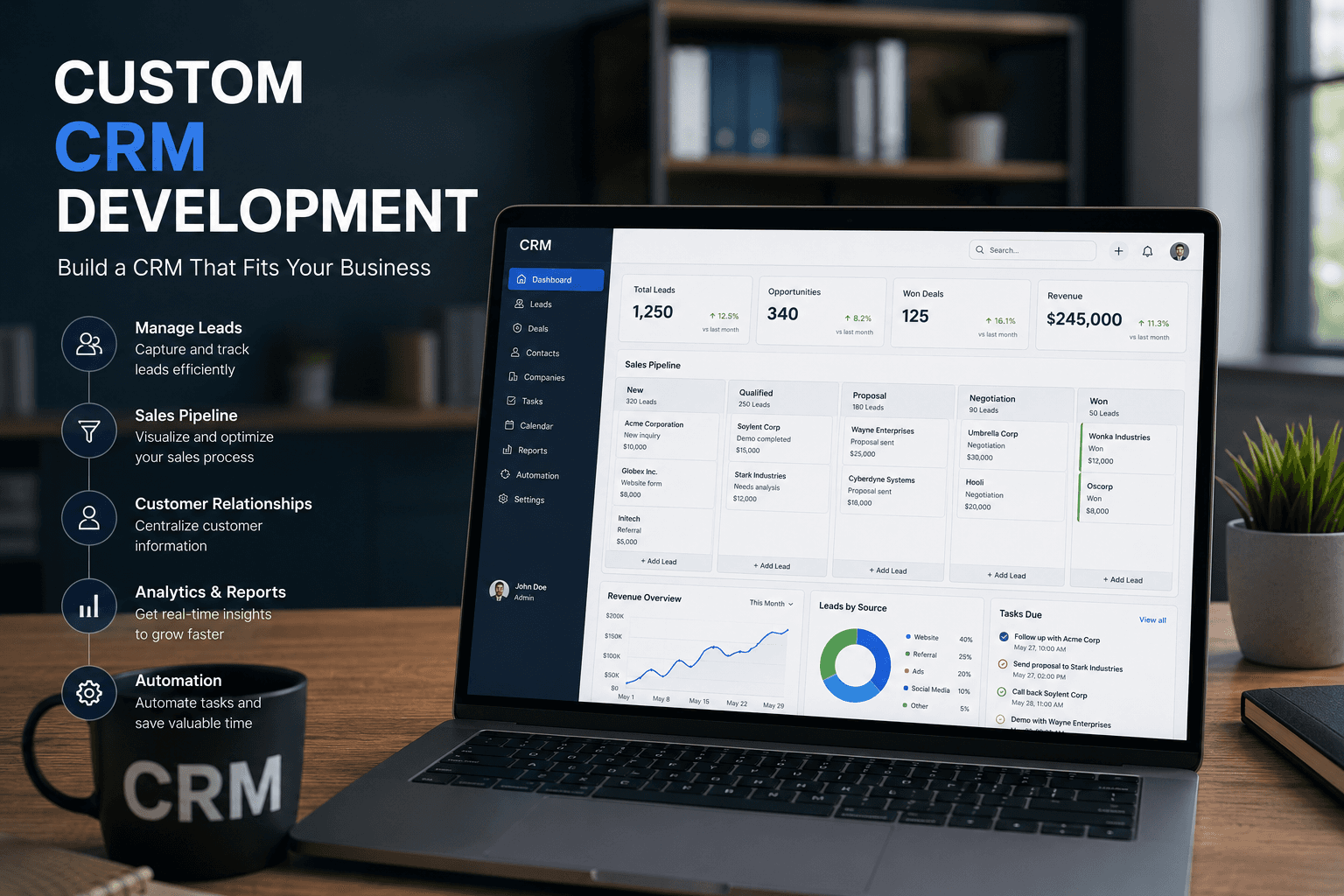
Custom CRM Development: Complete Guide
Everything businesses need to know about custom CRM development: what it is, benefits, essential features, AI-powered capabilities, costs, the development process, and how to decide if building a custom CRM is right for your company.