How Much Does It Cost to Fix a Vibe-Coded App?
Typical costs to audit, patch, refactor or rebuild an app made with AI tools like Lovable or Bolt, plus timelines and what moves the price.
You built your app with Lovable, Bolt, Replit or Cursor. It works in the demo, but now it needs to handle real users, real payments and real data. The question every founder asks next: how much will it cost to make this production-ready?
Quick answer: an audit usually costs $2,500 to $6,000. Urgent security fixes run $500 to $3,000. Stabilizing a small app costs $5,000 to $20,000, a substantial refactor $20,000 to $50,000, and a rebuild from $30,000 for a simple SaaS to $150,000 or more for complex platforms. The audit tells you which bucket you are in.
Cost by stage
Ranges are approximate and based on published rescue pricing, such as Rocking Tech's breakdown (converted from GBP and rounded) and Wavect's audit timelines. Your quote depends on what the audit finds.
| Stage | What it covers | Typical cost | Typical time |
|---|---|---|---|
| Audit | Code, database, security, permissions, hosting and a ranked fix plan | $2,500 to $6,000 | A few days to 3 weeks |
| Emergency fixes | Exposed keys, missing access rules, broken auth, a crashing flow | $500 to $3,000 | Hours to a few days |
| Stabilization | Tests for core flows, error handling, logging, backups, deployment pipeline | $5,000 to $20,000 | 1 to 4 weeks |
| Substantial refactor | Restructure backend, data model fixes, performance, payments | $20,000 to $50,000 | 2 to 8 weeks |
| Rebuild | New codebase, using the prototype as a spec | $30,000 to $150,000+ | 6 to 16+ weeks |
A surprising number
According to figures cited by Rocking Tech, rebuilding a multi-tenant SaaS from a Lovable prototype can cost $30,000 to $60,000, while building it correctly from scratch would cost $15,000 to $35,000. The lesson: the longer you keep stacking features on a fragile base, the more the fix costs.
What makes the price go up
- Multiple customers in one app (multi-tenancy): separating data between accounts is one of the most common and expensive fixes.
- Payments and subscriptions: retries, refunds, failed cards and webhooks need careful handling.
- Sensitive or regulated data: health (HIPAA), financial or personal data need extra security work and testing.
- Integrations: every external API adds edge cases.
- Number of active users: live users mean fixes must happen without downtime or data loss.
- No version history: if the code is not in Git, the first step is getting control of it.
What makes it cheaper
- the data model is reasonable and only the code is messy;
- the code is already in GitHub with a clear history;
- you know which features matter and which can be cut;
- you fix early, before more features pile on.
Who you hire changes the price too
| Option | Hourly rate | Notes |
|---|---|---|
| US agency | $120 to $250 | Same time zone, highest cost |
| Nearshore team (Latin America) | $35 to $80 | Overlapping hours, lower cost; see hiring developers in Brazil |
| Freelancer on a marketplace | Varies widely | Cheapest for small fixes, risky for structural work |
How to keep the cost under control
- Start with a fixed-price audit, not an open-ended contract.
- Fix critical security issues first, even if you rebuild later.
- Freeze new features until the core is stable.
- Ask for a fixed price per phase once the audit removes the unknowns.
- Plan maintenance after the fix; see our maintenance guide for AI-generated apps.
For the full rescue process, read vibe code rescue: how to take an AI-built app to production. For the technical side, see how to refactor a vibe-coded app.
FAQ
Is it cheaper to fix or to rebuild?
Fixing is usually cheaper when the data model is sound. Rebuilding wins when the structure is fundamentally wrong, because every fix on a bad base costs more over time.
Why do I need an audit first?
Without it, any quote is a guess. The audit turns unknowns into a scoped plan with a fixed price.
Can I fix it myself with more prompts?
For small issues, sometimes. For security, data separation and payments, you need a developer who can read and test the code.
Will I lose my users or data during the fix?
Not if the work is planned well. A good team fixes in stages, with backups and testing before each release.
Conclusion
Fixing a vibe-coded app is almost always cheaper than letting it break in front of customers. Start with an audit, fix security first, and decide between refactor and rebuild with real data, not guesses.
Get a Quote for Your App
withnocode audits and fixes apps built with AI tools, with a fixed-price plan after the audit. Learn how we fix your vibe-coded app.
Related Articles
ERP vs CRM: What's the Difference?
Understand the key differences between ERP and CRM systems: what each one does, their benefits, use cases, costs, the role of AI, and how to decide which system (or both) your business actually needs.
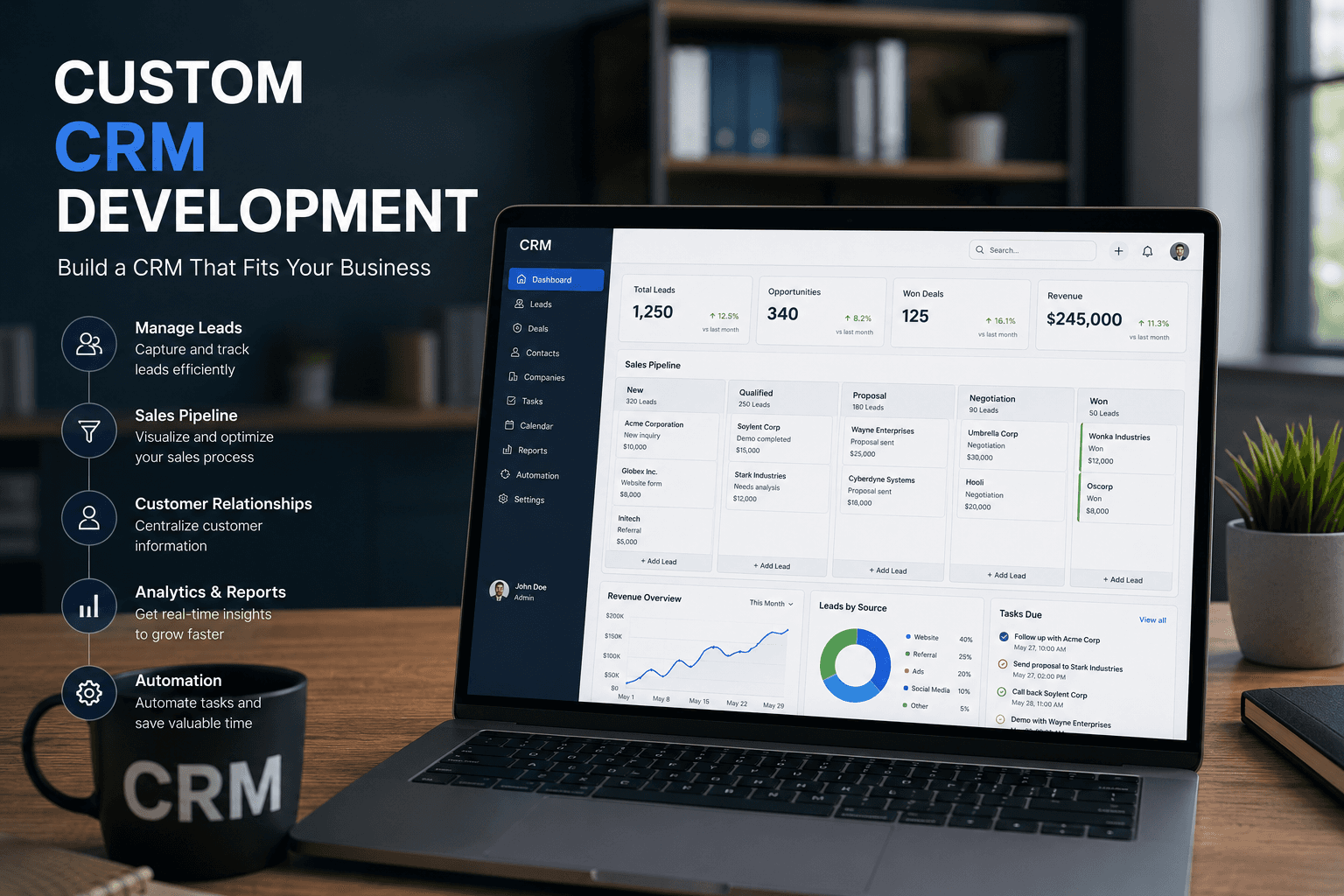
Custom CRM Development: Complete Guide
Everything businesses need to know about custom CRM development: what it is, benefits, essential features, AI-powered capabilities, costs, the development process, and how to decide if building a custom CRM is right for your company.