Why Every Lovable App Needs Ongoing Maintenance
Discover why launching a Lovable app is just the beginning. Learn about the critical importance of ongoing maintenance for AI-generated applications including security updates, API monitoring, AI optimization, and long-term scalability.
Lovable has fundamentally changed how startups and businesses build software. Tasks that once required months of development can now be completed in weeks—or even days. Founders can rapidly launch MVPs, internal tools, customer portals, SaaS products, and AI-powered applications without the traditional barriers of software development.
But while Lovable dramatically accelerates the path to launch, it does not eliminate the need for ongoing maintenance.
One of the most common misconceptions among founders is that once a Lovable application goes live, development is complete. In reality, launch day is only the beginning of an application's lifecycle.
Every successful software product requires continuous improvements, monitoring, updates, optimization, and technical support. Lovable applications are no exception.
Whether you're running a startup MVP, a growing SaaS platform, or an AI-powered business tool, ongoing maintenance is essential for keeping your application secure, scalable, and competitive.
The Myth of the "Finished" Lovable App
Many first-time founders assume software behaves like a physical product.
You build it once, launch it, and move on.
Software doesn't work that way.
Your application exists within an ecosystem that constantly changes:
- Customer expectations evolve
- New competitors enter the market
- APIs release updates
- AI models improve
- Security threats emerge
- Business processes change
A Lovable application that performs perfectly today may require significant updates six months from now.
The companies that achieve long-term success understand that software is a living asset that requires ongoing care.
Lovable Accelerates Development—Not Maintenance
Lovable enables developers to generate and deploy applications faster than ever before.
However, once an application enters production, the same software engineering principles still apply.
A production-ready Lovable app typically includes:
- Frontend components
- Backend logic
- Databases
- Authentication systems
- Third-party APIs
- Cloud infrastructure
- AI integrations
Every one of these components evolves over time.
Maintenance ensures all moving parts continue working together as expected.
👉 Related Reading: AI-Generated App Maintenance Guide
APIs Change More Often Than Most Founders Realize
Modern applications rarely operate in isolation.
Most Lovable apps rely on external services such as:
- OpenAI
- Anthropic
- Stripe
- HubSpot
- Salesforce
- Twilio
- Google Services
- Slack
These providers regularly update their APIs.
Authentication methods change. Endpoints become deprecated. Rate limits are modified. New security requirements are introduced.
Without proactive maintenance, integrations that once worked flawlessly can suddenly break.
Businesses often discover these problems only after customers begin reporting issues.
Routine maintenance helps identify and resolve integration risks before they impact users.
AI-Powered Features Require Continuous Optimization
One of the biggest reasons companies choose Lovable is its ability to quickly build AI-powered products.
However, AI applications introduce unique maintenance requirements.
Unlike traditional software, AI systems constantly evolve.
- New models are released
- Prompt engineering techniques improve
- Costs fluctuate
- Performance changes
- User expectations increase
A chatbot that delivers acceptable responses today may be significantly improved through optimization six months later.
Companies that actively maintain and refine their AI workflows often create better user experiences while reducing operating costs.
Maintenance is not just about fixing problems—it's about continuously improving performance.
For businesses seeking specialized expertise, choosing to hire a Lovable developer can provide the technical knowledge needed to optimize AI-powered features effectively.
User Feedback Creates New Opportunities
No matter how much planning goes into a project, users will always reveal new insights after launch.
Real-world usage exposes:
- Missing features
- Confusing workflows
- Unnecessary steps
- Usability issues
- New business opportunities
The first version of an application is rarely the version that ultimately succeeds.
The most successful startups iterate constantly.
Through ongoing maintenance and development, businesses can transform user feedback into competitive advantages.
This process often becomes the primary driver of long-term product growth.
Performance Problems Appear as You Scale
A Lovable application may perform perfectly with 100 users.
That doesn't guarantee it will perform equally well with 10,000 users.
Growth introduces new challenges:
- Larger databases
- More API requests
- Increased server loads
- More concurrent users
- Greater infrastructure demands
Without optimization, applications can experience:
- Slower page loads
- Delayed API responses
- Increased hosting costs
- Poor user experiences
- Lower conversion rates
Regular maintenance ensures your platform continues performing efficiently as demand grows.
Security Is Never a One-Time Task
Cybersecurity threats evolve constantly.
New vulnerabilities are discovered every day across software frameworks, authentication systems, databases, and third-party services.
A secure application today may not remain secure indefinitely.
Security-focused maintenance typically includes:
- Access control reviews
- Authentication updates
- Dependency updates
- Infrastructure monitoring
- API security audits
- Database protection
For businesses handling customer information, payment data, or proprietary information, ongoing security maintenance is critical.
Ignoring security updates can expose organizations to unnecessary risk.
Technical Debt Accumulates Faster Than Expected
Rapid development is one of Lovable's greatest strengths.
However, speed can also create technical debt.
As new features are added, applications often accumulate:
- Legacy workflows
- Unused components
- Redundant code
- Outdated integrations
- Inefficient database structures
Left unchecked, technical debt can slow future development and increase maintenance costs.
This is why many businesses eventually need to hire a Lovable developer who can review, optimize, and improve the application's architecture over time.
Proactive maintenance prevents small issues from becoming major obstacles.
Refactoring Becomes Necessary as Products Mature
Many startups launch quickly and validate their ideas successfully.
As traction grows, the original architecture often requires refinement.
This process is known as refactoring.
Refactoring helps improve:
- Scalability
- Performance
- Maintainability
- Code organization
- Development velocity
Businesses that ignore refactoring often encounter increasing development costs and slower feature delivery.
Understanding when to invest in refactoring a vibe-coded application can significantly extend the lifespan of a Lovable application.
The Cost of Ignoring Maintenance
Some founders view maintenance as an unnecessary expense.
In reality, neglecting maintenance is usually far more expensive.
Common consequences include:
Unexpected Downtime
Application outages can disrupt operations and frustrate users.
Broken Integrations
Third-party services may stop functioning correctly.
Security Vulnerabilities
Unpatched systems create unnecessary risks.
Poor User Experience
Performance issues can reduce customer satisfaction.
Slower Growth
Technical debt can delay future product development.
Higher Development Costs
Small problems become more difficult and expensive to solve over time.
Preventative maintenance is almost always more affordable than emergency intervention.
What Should a Lovable Maintenance Plan Include?
A comprehensive maintenance plan should address both technical stability and future growth.
Key areas include:
Bug Fixes
Identifying and resolving issues discovered after launch.
Security Updates
Protecting applications against emerging threats.
API Monitoring
Ensuring third-party integrations remain functional.
AI Optimization
Improving prompts, workflows, and AI-powered experiences.
Performance Enhancements
Optimizing speed and scalability.
Infrastructure Management
Monitoring hosting environments and databases.
Feature Development
Implementing improvements based on user feedback.
Technical Support
Providing assistance when issues arise.
The exact scope depends on the application's complexity and business objectives.
For businesses looking for comprehensive support, our custom AI software development services include ongoing maintenance options tailored to your specific needs.
Monthly Maintenance vs Reactive Support
Many companies struggle to decide whether they need ongoing maintenance or occasional support.
Reactive Support
This approach involves addressing issues only after they occur.
While suitable for small projects, it often leads to:
- Longer downtime
- Higher emergency costs
- Slower issue resolution
Ongoing Maintenance
A maintenance retainer provides continuous oversight and proactive improvements.
Benefits include:
- Faster response times
- Improved reliability
- Better security
- Continuous optimization
- Predictable support costs
For growing startups and SaaS businesses, ongoing maintenance is typically the most effective approach.
Signs Your Lovable App Needs Ongoing Maintenance
Your application likely requires ongoing support if:
- You have active users
- You process customer data
- You rely on AI features
- You integrate with third-party APIs
- You plan to add new functionality
- Your business depends on the platform daily
- User growth is accelerating
For most businesses, these conditions apply shortly after launch.
Why Businesses Hire Lovable Experts for Maintenance
Maintaining a Lovable application requires more than basic troubleshooting.
It requires expertise in:
- Lovable workflows
- React development
- Database architecture
- AI integrations
- API management
- Security best practices
- Scalability planning
Many companies choose to hire a Lovable developer because they need ongoing access to specialized expertise without building an internal engineering team.
This approach allows founders to focus on growth while experienced developers handle technical operations.
👉 Related Reading: AI-Generated App Maintenance Guide
Final Thoughts
Lovable has revolutionized software development by making it possible to build sophisticated applications faster than ever before.
But speed of development does not eliminate the need for long-term maintenance.
Every successful Lovable application requires ongoing attention to security, performance, integrations, AI optimization, and feature development.
Businesses that invest in maintenance create products that remain reliable, scalable, and competitive as they grow.
The companies that succeed with Lovable are not the ones that launch the fastest.
They are the ones that continue improving long after launch day.
Need Help Maintaining Your Lovable App?
Our team specializes in ongoing maintenance, optimization, and support for AI-generated applications. Get a free assessment of your Lovable app's maintenance needs.
Related Articles
ERP vs CRM: What's the Difference?
Understand the key differences between ERP and CRM systems: what each one does, their benefits, use cases, costs, the role of AI, and how to decide which system (or both) your business actually needs.
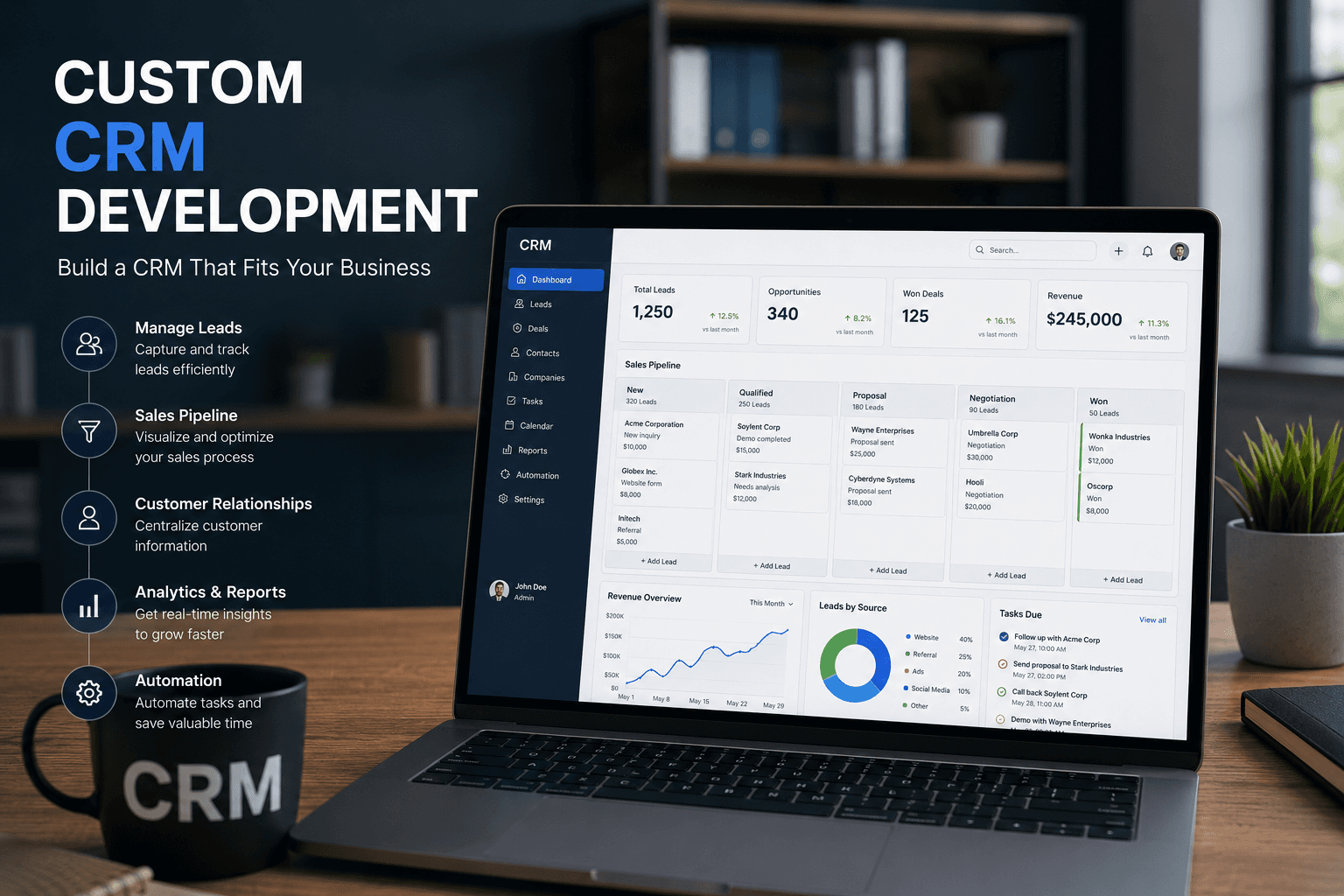
Custom CRM Development: Complete Guide
Everything businesses need to know about custom CRM development: what it is, benefits, essential features, AI-powered capabilities, costs, the development process, and how to decide if building a custom CRM is right for your company.