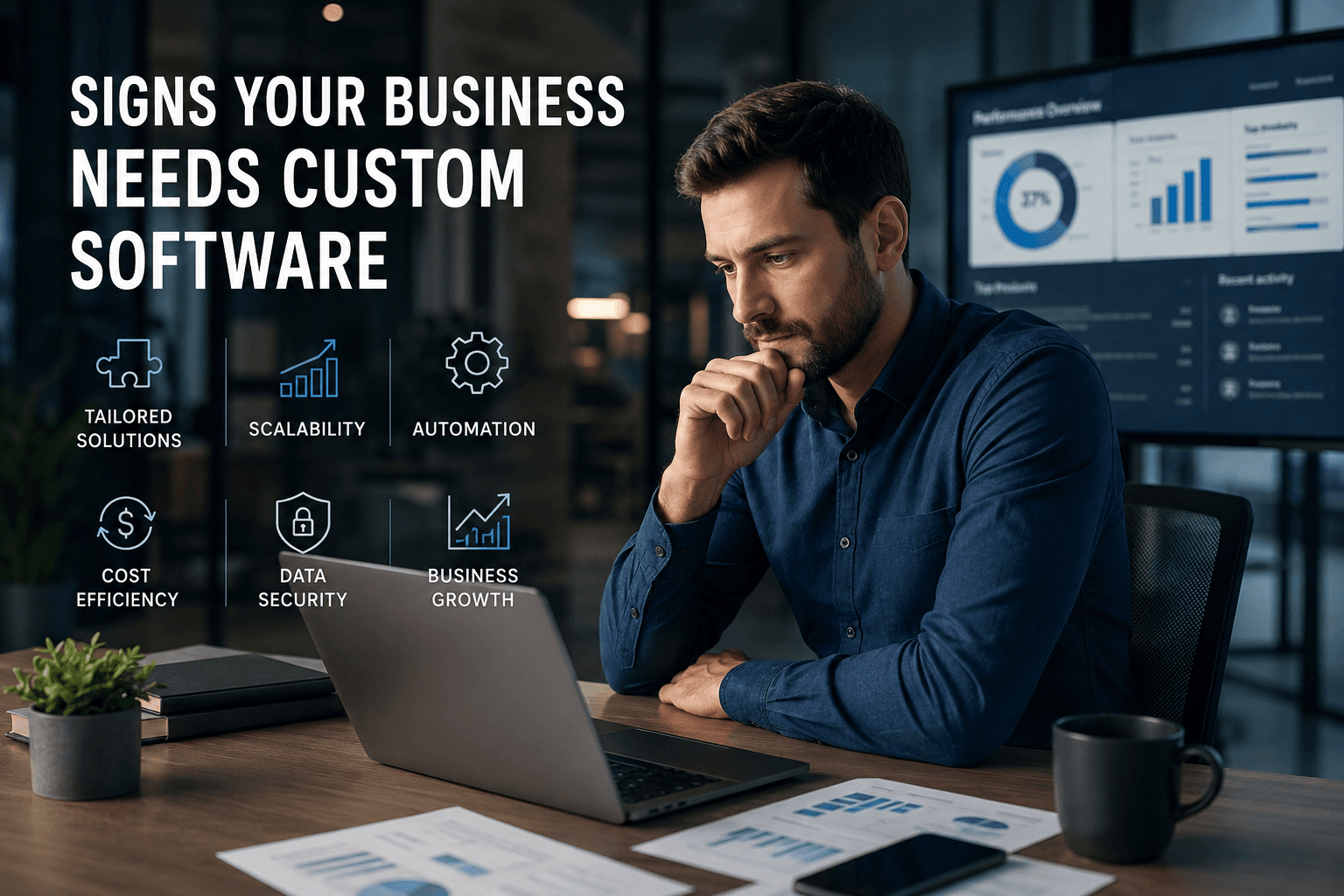
Signs Your Business Needs Custom Software
Technology has become a critical part of how modern businesses operate. Learn the key signs that indicate your business has outgrown generic tools and needs custom software solutions.
Last updated: May 2026
Technology has become a critical part of how modern businesses operate.
From internal workflows and customer communication to sales, operations, and analytics, software now influences nearly every aspect of growth and efficiency.
In the early stages, many companies rely on off-the-shelf platforms to manage these processes. And in many cases, that works — for a while.
But as businesses grow, operations become more complex, teams expand, and workflows evolve. Eventually, generic tools start creating limitations instead of solving problems.
At that point, custom software often becomes less of a luxury — and more of a strategic necessity.
So how do you know when your business has reached that stage?
Here are some of the clearest signs.
1. Your Team Is Constantly Switching Between Multiple Tools
One of the most common signs is operational fragmentation.
Many businesses end up using:
- spreadsheets
- CRMs
- project management tools
- automation platforms
- communication apps
- separate databases
Over time, this creates disconnected workflows and inefficiencies.
Teams waste time manually transferring information between systems, dealing with duplicated processes, and trying to keep everything synchronized.
This usually indicates that the business has outgrown generic workflows and could benefit from a more centralized solution.
2. Your Processes Depend Too Much on Manual Work
Manual processes may work temporarily, but they rarely scale efficiently.
If your team spends significant time on repetitive tasks such as:
- updating spreadsheets
- generating reports
- sending repetitive communications
- organizing data manually
- moving information between platforms
your business is likely losing both time and operational efficiency.
Custom software can automate many of these processes and significantly reduce operational friction.
3. Your Current Software No Longer Fits Your Workflow
Most off-the-shelf platforms are built to serve a broad audience.
As a result, businesses often find themselves adapting their operations around software limitations rather than building systems around how they actually work.
Common signs include:
- forcing teams into inefficient workflows
- relying on workarounds
- missing important features
- limited customization options
- integration difficulties
When software starts controlling your process instead of supporting it, it's often a strong signal that a tailored solution may be needed.
Many businesses wait too long before addressing operational bottlenecks, which can create larger scalability problems later.
4. Your Business Is Growing Faster Than Your Systems
Growth creates complexity.
As customer volume, team size, and operational demands increase, systems that once worked well can begin to break down.
This may appear as:
- slower operations
- performance issues
- inconsistent data
- communication bottlenecks
- scaling limitations
Many businesses reach a point where growth becomes difficult not because of demand — but because their systems can no longer support efficient operations.
Scalable custom software development solutions are often implemented specifically to solve this type of operational bottleneck.
Ready to Scale?
If your business is experiencing growth limitations due to software constraints, it may be time to explore custom solutions designed specifically for your operational needs.
5. You Need Better Integration Between Systems
Modern businesses rely on multiple platforms and services.
However, many generic tools do not integrate well together — especially as workflows become more advanced.
This often creates:
- disconnected data
- duplicated work
- inaccurate reporting
- inefficient communication between departments
Custom software allows businesses to build integrations around their existing infrastructure rather than forcing operations into disconnected systems.
6. Customer Experience Is Becoming a Priority
As competition increases, customer experience becomes a major differentiator.
Many companies eventually realize that generic tools limit their ability to create personalized and efficient user experiences.
Custom platforms allow businesses to build:
- tailored customer portals
- personalized dashboards
- optimized onboarding flows
- unique service experiences
- scalable client-facing systems
This level of flexibility is becoming increasingly important in digital-first markets.
7. You're Spending More Time Managing Software Than Growing the Business
One overlooked sign is when teams spend more time dealing with tools than focusing on growth.
Businesses often reach a stage where:
- managing subscriptions becomes difficult
- maintaining workflows becomes complex
- teams rely on too many disconnected systems
- software limitations slow decision-making
At this point, operational complexity itself becomes a problem.
Custom software can simplify infrastructure by consolidating processes into a centralized ecosystem tailored to the business.
8. Your Business Requires More Flexibility
Modern businesses evolve quickly.
New services, operational changes, automation opportunities, and customer demands often require systems to adapt continuously.
Generic software is not always built for this level of flexibility.
This is one reason many companies are increasingly investing in scalable web app development services that can evolve alongside their business operations.
Need Flexibility?
Web applications offer the flexibility and scalability that growing businesses need. Explore how custom web development can support your evolving requirements.
9. Data and Reporting Have Become Difficult to Manage
As businesses scale, data becomes more valuable — but also more difficult to manage.
Companies frequently struggle with:
- inconsistent reporting
- fragmented analytics
- duplicate data sources
- delayed decision-making
Custom software allows businesses to centralize and structure information more effectively, improving both operational visibility and strategic decision-making.
10. You're Thinking Long-Term
One of the clearest signs is simply strategic maturity.
Businesses that plan for long-term growth often realize that relying entirely on generic platforms can create limitations over time.
Custom software provides:
- ownership
- flexibility
- scalability
- competitive differentiation
- operational efficiency
Rather than continuously adapting to external software limitations, businesses can build systems specifically designed around their long-term objectives.
The Rise of Hybrid Development Approaches
Modern custom software development no longer follows the slow and expensive models traditionally associated with enterprise software.
Today, many teams combine:
- AI-assisted development
- no-code and low-code tools
- modern cloud infrastructure
- scalable web technologies
- hybrid development workflows
Many businesses today are adopting hybrid approaches that combine speed and flexibility instead of relying entirely on a single development model.
Modern development methodologies have also significantly changed how businesses approach software investment and project costs.
This allows businesses to move faster while maintaining long-term flexibility.
As a result, custom software has become significantly more accessible for startups, mid-sized businesses, and growing companies alike.
Final Thoughts
Not every business needs custom software immediately.
Early-stage startups often begin by validating ideas before investing heavily in full-scale systems.
But many organizations eventually reach a point where generic tools begin creating more limitations than value.
The signs are often operational:
- inefficiency
- disconnected workflows
- scalability challenges
- lack of flexibility
- increasing complexity
Custom software is not simply about building technology — it's about creating systems that align with how a business actually operates and grows.
The companies gaining the biggest advantage today are often the ones building infrastructure tailored specifically to their long-term needs instead of relying entirely on one-size-fits-all platforms.
A Practical Perspective
In practice, businesses often benefit most from working with teams that understand both technology and operational strategy. Balancing speed, scalability, flexibility, and long-term growth has become one of the most important aspects of building effective digital systems in today's increasingly competitive environment.
Related Articles
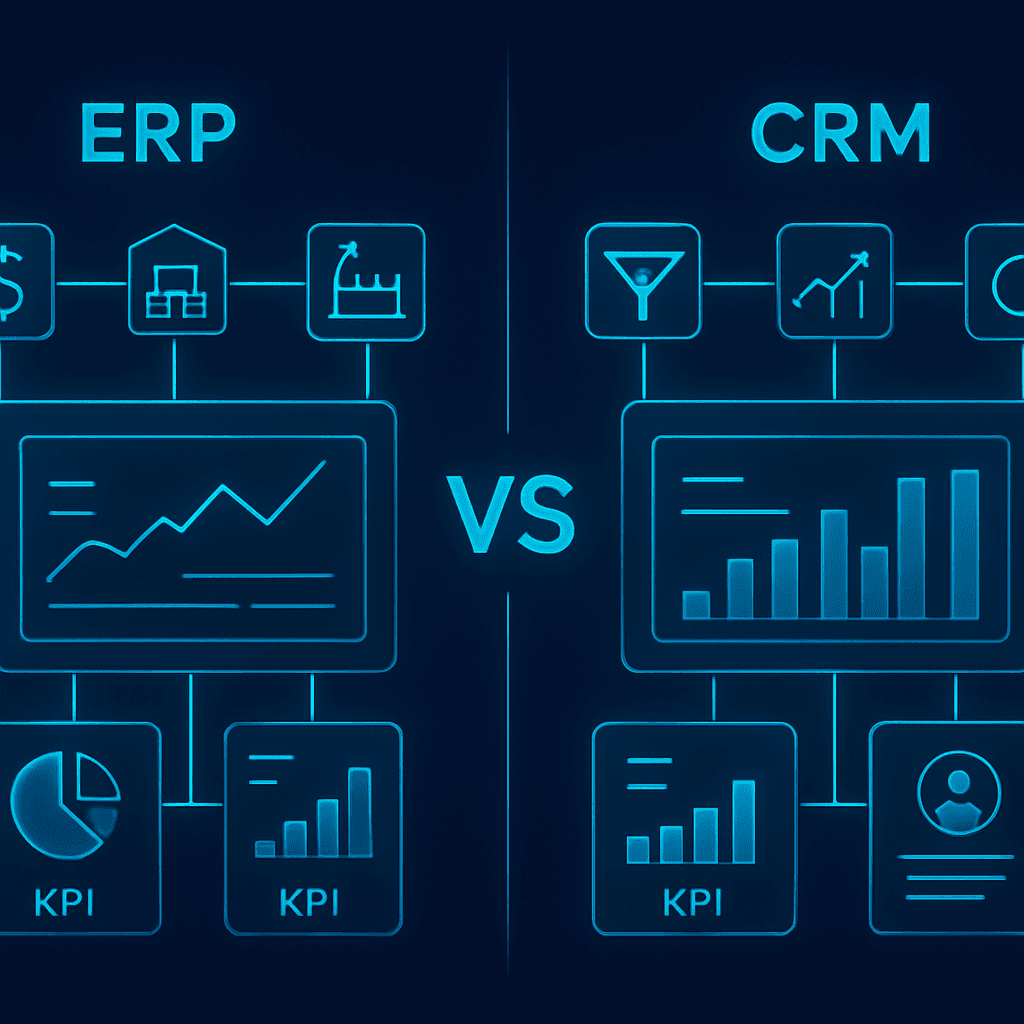
ERP vs CRM: What's the Difference?
Understand the key differences between ERP and CRM systems: what each one does, their benefits, use cases, costs, the role of AI, and how to decide which system (or both) your business actually needs.
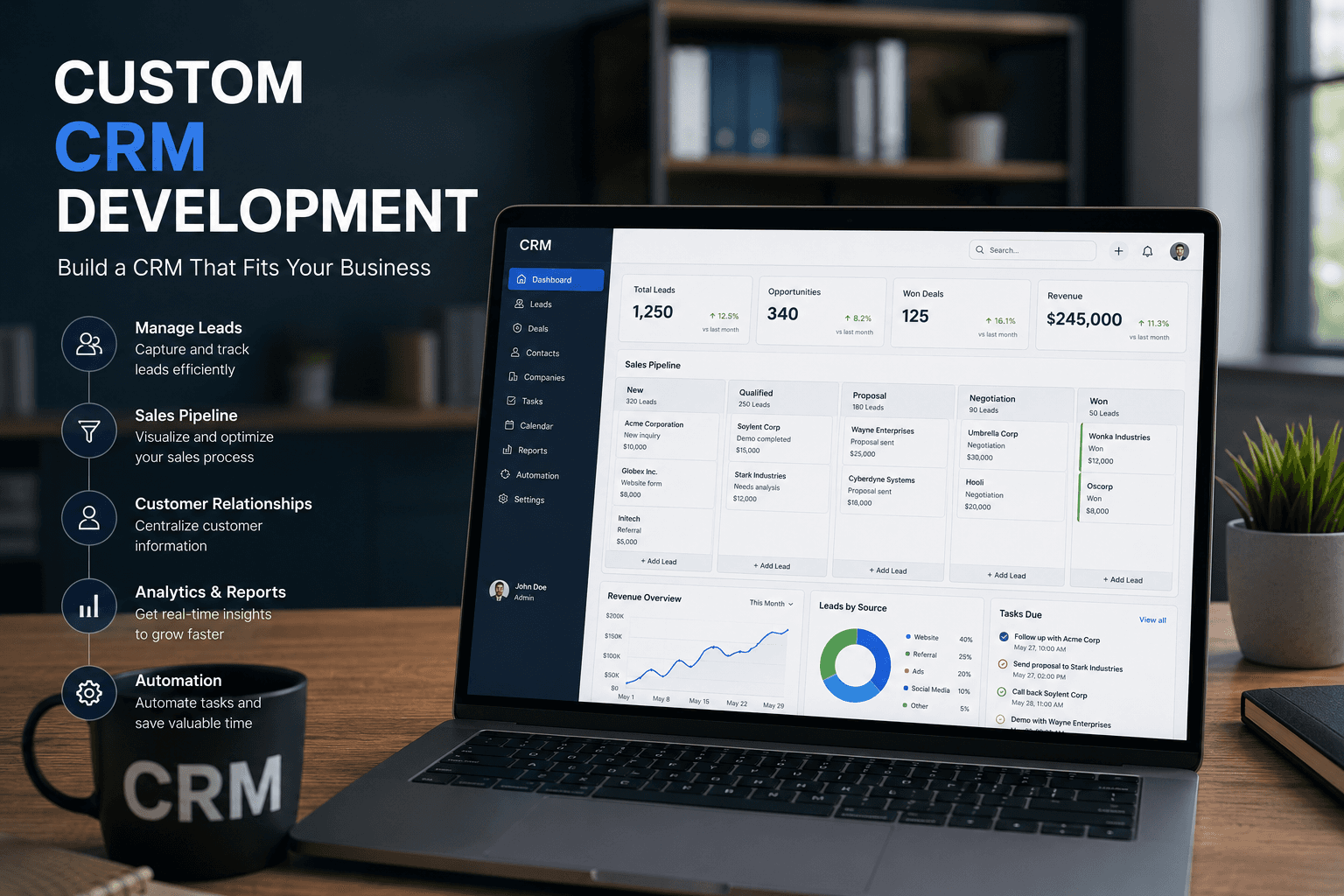
Custom CRM Development: Complete Guide
Everything businesses need to know about custom CRM development: what it is, benefits, essential features, AI-powered capabilities, costs, the development process, and how to decide if building a custom CRM is right for your company.